




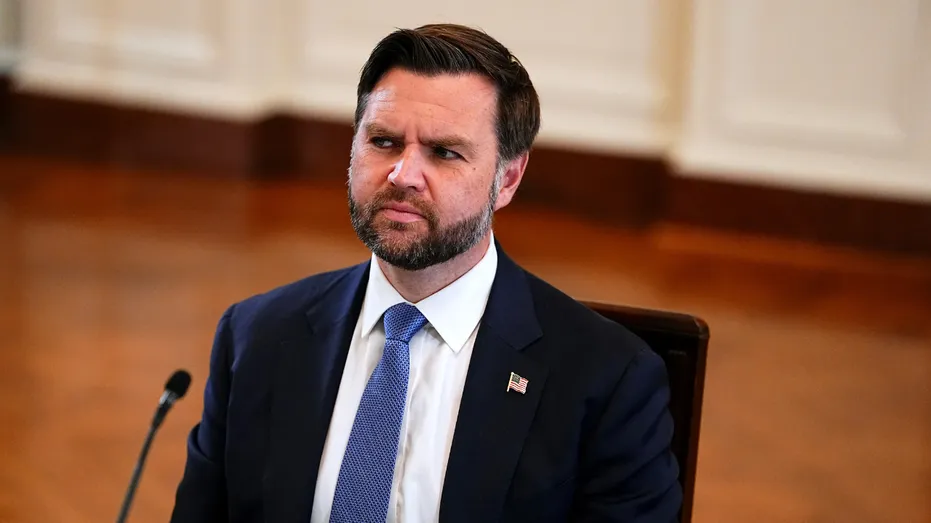
Vice President JD Vance has outlined key details of a significant U.S.-Iran agreement, aiming to foster a “new day” in the Middle East. Crucially, Vance addressed concerns regarding the potential use of American taxpayer dollars for Iran’s substantial reconstruction fund.
Deal Details and Financial Safeguards
In a recent interview, Vance clarified that the proposed accord stipulates no direct American financial contribution to Iran. “The agreement says they are not getting a single dime of American money,” he stated. The arrangement, however, allows for the possibility of other nations investing in Iran’s development, estimated at a $300 billion reconstruction fund, contingent upon Tehran fulfilling its obligations under the deal.
“What the agreement does say is if the Iranians behave and if there are sanctions relief and if the Iranians are integrated into the world economy, we would invite other countries, not us, but other countries to invest in their country,” Vance explained.
The agreement, referred to as a memorandum of understanding, is slated for signing this Friday in Switzerland. It reportedly covers the reopening of the Strait of Hormuz, cessation of hostilities, and addressing Iran’s nuclear weapons program. Any $300 billion reconstruction fund under consideration is expected to be financed by private investors, not U.S. taxpayers.
Performance-Based Agreement
While the complete terms of the pact remain undisclosed, Vance emphasized its performance-based nature. Access to the reconstruction fund is strictly tied to Iran’s adherence to the deal’s conditions. “The Iranians don’t get a dime unless they behave and change their behavior,” Vance asserted. “If they show verifiable commitment, and that means a real inspections regime, then they can get the benefits of the bargain.”
Iran’s Deputy Foreign Minister Kazem Gharibabadi, speaking through the Tasnim News Agency, commented that the memorandum was drafted with “active distrust” rather than blind faith.
Opportunity for Transformation
Vance suggested that Iran has a genuine chance to reshape its relationship with the United States, emphasizing that actions will be valued over mere words. “I think that they see there’s a real opportunity here to turn over a new leaf so long as they do the right thing,” he declared. “If the Iranians are willing to change their ways. If they’re willing to behave like a normal country, stop trying to build a nuclear weapon, stop trying fund terrorism all over the Middle East, then we are willing to actually fundamentally transform our relationship with them.”
Nuclear Disarmament Component
The vice president confirmed that the deal includes provisions for a nuclear-disarmed Iran. Plans are in place to dismantle the nation’s highly enriched uranium stockpile. “What we’re going to do is destroy the highly enriched material, the nuclear dust, and we’re gonna do it with the Iranians,” Vance detailed. “[The administration] wants us to work with the Iranians, with the international organizations to destroy that stockpile of enriched material.”
Shifting Hardliner Stance
According to Iranian President Masoud Pezeshkian, Supreme Leader Mojtaba Khamenei played a direct role in shaping the memorandum of understanding. Vance noted that some Iranian hardliners are reportedly beginning to re-evaluate decades of animosity toward the U.S. “You talk about hardliners and moderates. What’s fascinating to me about their system is that we’re seeing even people that I would have assumed are hardliners who are kind of saying, ‘Maybe it was a mistake for us to do the things that we’ve done over the last 40 years. Maybe we should turn over a new leaf in the relationship with the United States of America,’” he remarked. “We’ve never had this level of direct communication with the Iranian leadership.”
Vance cautioned that a failure by Iran to uphold its commitments would result in a return to the previous state of relations. “The reason why our Arab allies, our Gulf allies, are so excited about this is because they think this is a new day in the Middle East,” he stated. “But again, if it’s not, then it’s not. If the Iranians don’t comply, then we’re gonna go back to the same relationship that we had before, where we have all the cards.” He concluded, “We have the cards, and if they don’t honor the commitment, we’ll figure out what to do when we get there.”


