




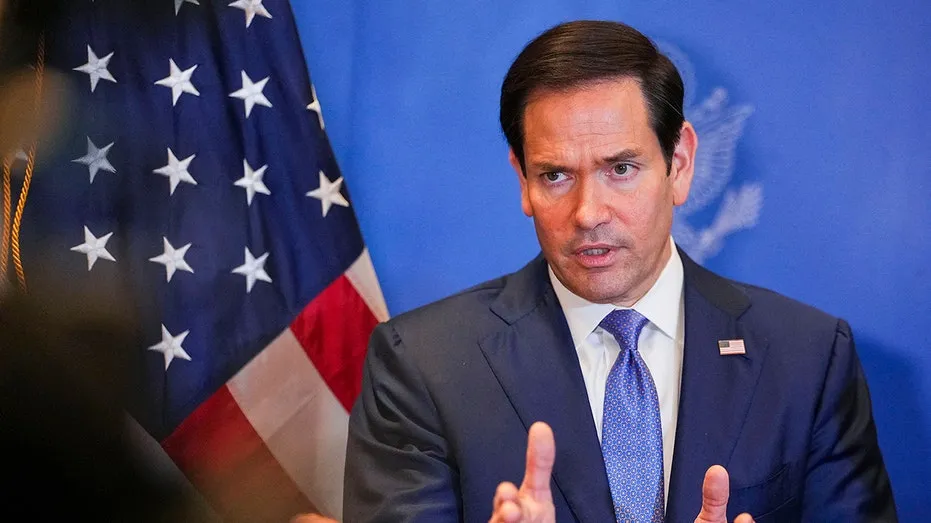
Secretary of State Marco Rubio affirmed on Wednesday that the United States is prepared to engage in diplomatic discussions with Iran, but issued a stern warning that Tehran will face repercussions if it continues to disregard its international obligations. These remarks were made during the ASEAN Summit held in the Philippines, occurring just hours after U.S. military operations concluded their eleventh consecutive night of strikes targeting Iranian military installations.
Rubio articulated that while Washington’s door remains open to diplomacy, there are significant doubts about Iran’s sincerity in negotiations. “The issue we’re encountering currently is their lack of seriousness about discussions. If they are serious, then we are serious,” Rubio stated. “If they are not, then we will take the necessary actions to safeguard our interests, as well as those of our allies.”
Strait of Hormuz: A Crucial Waterway
A key point of contention, according to Rubio, is Iran’s assertion of a right to control maritime traffic through the Strait of Hormuz. He firmly rejected this claim, stating that Tehran possesses no legal standing to dictate passage through this vital international waterway. Allowing such control, he warned, would establish a perilous global precedent.
“If we establish a precedent in the Middle East where a state can unilaterally decide to control an international waterway, and then demand payment or threaten to destroy ships, we are creating an extremely dangerous situation that is bound to be replicated elsewhere in the world, including in this region,” Rubio explained. He emphasized that the “fundamental principle of freedom of navigation” is at stake.
The Secretary elaborated on the potential global ramifications: “If that principle is threatened, then the global economy is put at risk, and the established rules that have supported 150 years of international trade and commerce are also endangered. This cannot be permitted to occur.”
Navigating a Tense Diplomatic Landscape
Rubio’s statements arrive as the United States and Iran have reached the midpoint of a 60-day negotiation period. This period was established by a memorandum of understanding signed on June 17, intended to address Iran’s nuclear and missile programs, sanctions relief, and the critical issue of freedom of navigation through the Strait of Hormuz.
Despite the framework for dialogue, the relationship between the two nations appears to be escalating toward conflict rather than de-escalation. Iran has been implicated in repeated attacks on commercial vessels transiting the strait, while U.S. forces have continued retaliatory strikes against Iranian military assets across the region.
While President Donald Trump has publicly declared a ceasefire to be “over,” he also indicated on Tuesday that Iran is eager to engage in direct talks. Rubio echoed this sentiment, confirming that Washington is prepared for negotiations but underscored that military options remain on the table.
“The United States remains open and willing to engage in constructive negotiations and discussions, provided that the commitments made are honored,” Rubio reiterated. “When those commitments are not upheld, as has been the case here, then there will be consequences. This is a necessary response.”
Maintaining Security and Global Stability
Rubio stressed the importance of maintaining the credible threat of military action as a deterrent against Iran’s potential disruption of one of the world’s most critical shipping lanes. He argued that without this deterrent, a significant portion of regional and global energy supplies would be vulnerable.
“If these consequences were not a factor, then we would currently be living in a reality where a substantial percentage of the energy supply in this region, and indeed 20% of the world’s energy supply, is being held hostage by a rogue regime,” he stated. He concluded by emphasizing that the U.S. commitment to ensuring the free flow of commerce and energy is unwavering.


