

USC’s Sparse Home Opener Crowd Draws Scrutiny
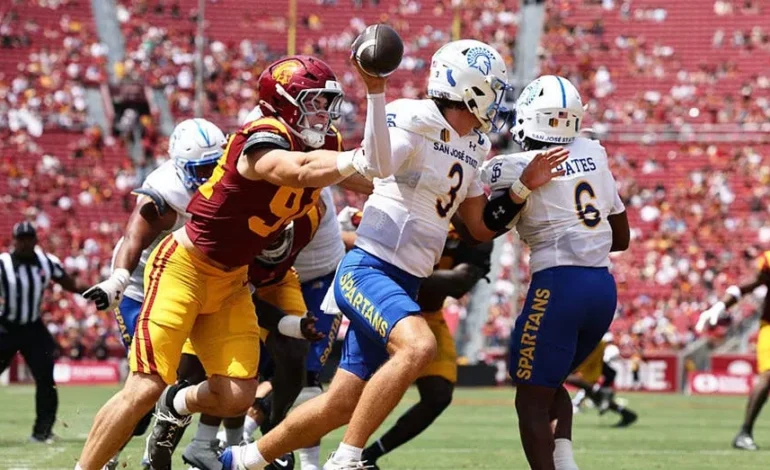

The much-anticipated return of college football season, often met with fervent enthusiasm, saw a surprisingly subdued turnout for USC’s home opener against San Jose State. Despite the Trojans’ dominant performance on the field, the attendance at the Los Angeles Memorial Coliseum became a focal point, drawing criticism and raising questions about fan engagement for a program with national championship aspirations.
A Lopsided Affair on the Field
USC, ranked No. 14 nationally, kicked off their 2026 season with a commanding display against San Jose State. The game was effectively decided in the first half, with USC establishing a commanding 28-0 lead by halftime. The Trojans continued their offensive onslaught, extending their advantage to 35-3 by the start of the fourth quarter, ensuring a comfortable victory in their season debut. The on-field action, while decisive, was overshadowed by the scenes in the stands.
Questions Swirl Around Coliseum Attendance
As the game unfolded, social media and sports commentators alike began to highlight the noticeable emptiness in large sections of the Coliseum. Images and videos circulated, showcasing sparse crowds even as USC built a substantial lead. This lack of a robust home-field presence for a highly ranked team’s season opener sparked widespread commentary.
Critics pointed to the optics as particularly damaging for a program that has historically boasted a passionate fanbase and is aiming for a national title. The contrast between the team’s on-field success and the lackluster attendance was widely described as an “embarrassment” by observers.
Factors Contributing to the Sparse Crowd
Several potential reasons were debated for the low turnout:
- Opponent Strength: San Jose State, while a competitive program, may not have generated the same level of excitement as a marquee conference opponent.
- Weather Conditions: Los Angeles experienced a hot afternoon, with temperatures reaching 92 degrees Fahrenheit. While this is common for Southern California in late summer, some argued it may have deterred fans from arriving early or staying for the entire game.
- Program Expectations: Despite USC’s storied history and current national ranking, the team’s recent performance trajectory and the perceived gap between USC and college football’s absolute elite might influence fan enthusiasm for non-conference games.
Historical Context and Program Legacy
The USC Trojans have a rich legacy in college football, producing numerous NFL stars and national championships. Legends such as Reggie Bush, Matt Leinart, Carson Palmer, Caleb Williams, Junior Seau, Troy Polamalu, Ronnie Lott, Marcus Allen, and O.J. Simpson have all donned the cardinal and gold. For many, USC football was synonymous with dominance and excitement, particularly during certain eras.
The Coliseum itself is an iconic venue, steeped in tradition. The sight of significant empty seats during a home opener for a top-15 team, especially after an eight-month hiatus from the sport, struck many as incongruous with the program’s historical stature and current national ranking.
Looking Ahead: The Challenge of Fan Engagement
The sparse attendance at the home opener presents a challenge for USC as they navigate the 2026 season. While the team’s performance on the field is paramount, cultivating a strong and visible home-field advantage is also crucial, particularly as they aim to compete for a national championship. The “bad optics,” as some commentators termed them, underscore the ongoing need for USC to connect with its fanbase and ensure that the Coliseum is a fortress on game days.
As the season progresses, the focus will likely remain not only on the Trojans’ quest for a championship but also on whether the attendance figures at future home games reflect the passion expected of a program with USC’s pedigree and ambitions.