




White House Uncovers $26 Billion ‘Transshipment Scam,’ Blames China

The White House has released a report detailing a significant scheme, dubbed the ‘Great Transshipment Scam,’ which it claims is costing the U.S. Treasury billions of dollars annually by allowing foreign exporters to circumvent tariffs. The report, produced by the White House Office of Trade and Manufacturing Policy, identifies China as a primary perpetrator, while also flagging over 40 other countries, including Panama, Mexico, Colombia, Brazil, Argentina, Chile, Peru, Costa Rica, and the Dominican Republic, as high-risk for engaging in these practices.
Understanding the Transshipment Scam
At its core, transshipment involves rerouting goods through an intermediary country before they reach the United States. This process can obscure the original country of origin, allowing products to potentially qualify for lower tariff rates than if they had been shipped directly. The White House report, a 25-page document titled “The Great Transshipment Scam,” posits that China has a long history of utilizing this method.
Following the implementation of Section 301 tariffs on Chinese goods in 2018, the direct U.S. trade deficit with China saw a decrease in 2019 and 2020. However, the report suggests that Chinese exporters began increasingly sending their products through third countries. This strategy involved minimal processing, such as light assembly, finishing, repackaging, or relabeling, in these intermediate locations. These actions were designed to create the illusion that the goods originated from a different nation, thereby avoiding the higher U.S. tariffs.
“Over time, these practices contributed to the development of a global network of production hubs, logistics platforms, free-trade zones, bonded warehouses, processing corridors, and re-export centers,” the report stated, describing the infrastructure built around transshipment activities.
Economic Impact and Enforcement Efforts
The financial implications of this scam are substantial. The report estimates that tariff-evading transshipment drains between $19 billion and $26 billion in annual revenue from the U.S. Treasury. The report also cites estimates from both government and private sectors that place the value of goods transshipped to avoid tariffs anywhere from $34.2 billion to a staggering $303 billion each year.
Trade adviser Peter Navarro, who leads the White House Office of Trade and Manufacturing Policy, was quoted by The Associated Press as saying, “For years, the great transshipment scam has let communist China launder its exports.” He further indicated that the Trump administration has been actively working to bolster enforcement against such practices.
Navarro also pointed out that other nations, such as India, might also employ transshipment tactics to bypass tariffs. He added that new trade agreements being pursued by the administration would include measures to penalize trading partners found to be engaging in this behavior.
Technological Solutions and Penalties
In its efforts to combat this issue, U.S. Customs and Border Protection has reportedly begun piloting a program that utilizes artificial intelligence to detect transshipment activities. Furthermore, importers found to have misrepresented the origin of their products could face retroactive tariff application, potentially extending back about a year.
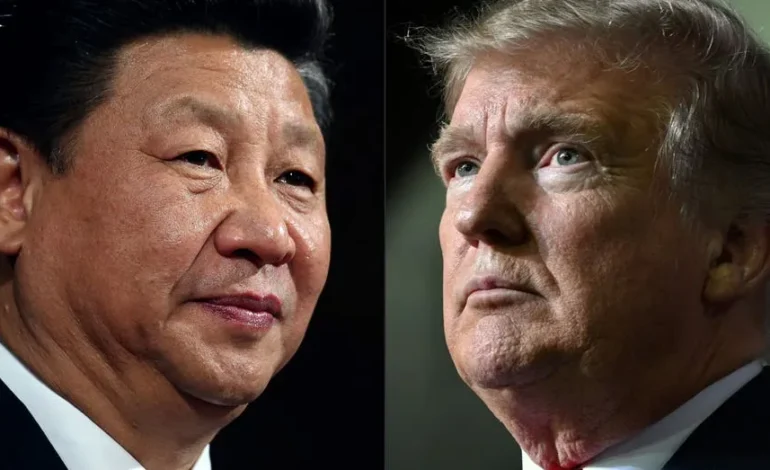
The release of this report comes at a time of heightened trade discussions between the U.S. and China. It precedes a planned visit to Washington by Chinese President Xi Jinping in September, following President Donald Trump’s own visit to Beijing in May. These high-level exchanges underscore the ongoing complexities and tensions in the U.S.-China trade relationship.
Broader Implications for Global Trade
The ‘Great Transshipment Scam’ report highlights a critical challenge in international trade: the ability of sophisticated global supply chains to be exploited for tariff evasion. The extensive network of logistics hubs and free-trade zones mentioned in the report underscores how international commerce infrastructure can be repurposed to circumvent national trade policies.
The U.S. government’s focus on this issue signals a broader strategy to rebalance trade relationships and ensure fair competition for American industries. By identifying and targeting transshipment, the administration aims to protect domestic manufacturers and secure U.S. revenue streams. The involvement of artificial intelligence in detection suggests a move towards more technologically advanced methods for trade enforcement.
The report’s findings and the administration’s response indicate a determined effort to address what it views as unfair trade practices. The implications extend beyond China, as the report names numerous other countries, suggesting a systemic problem in global trade enforcement. The coming months will likely reveal further actions and negotiations aimed at curbing these transshipment activities and their impact on the U.S. economy.