

Media Debates: Who Gets to Cheer for Team USA at the World Cup?
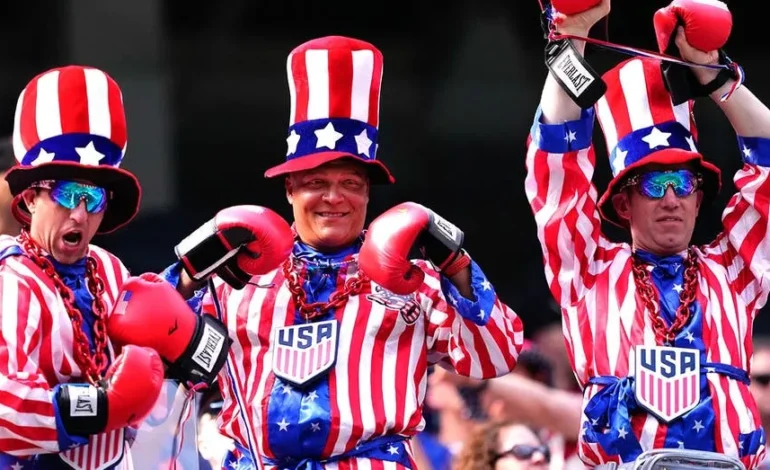

World Cup Sparks Debate Over ‘Authentic’ American Fan Identity
As the World Cup captivates audiences and the United States men’s national team advances, a conversation has emerged regarding who embodies the true spirit of an American fan. Reports indicate that some media outlets are attempting to define acceptable forms of patriotism and support for the national team, leading to a broader discussion about identity politics within sports.
Gatekeepers of Enthusiasm?
The current World Cup campaign has provided a platform for American sports media to engage with fans, but this engagement has also drawn criticism. Some analyses suggest that certain media figures and publications are presenting a narrow view of who constitutes a legitimate supporter of the U.S. national team. This perspective, according to these critiques, often involves scrutinizing fans based on their political leanings, perceived levels of nationalistic fervor, and even their backgrounds.
One prominent example cited involves commentary surrounding former player Alexi Lalas. An article in The Guardian reportedly characterized Lalas’ passionate, flag-waving patriotism as an unwelcome intrusion into the global sport, contrasting him with figures like Thierry Henry. The piece allegedly used loaded terms to describe Lalas, framing him as an emblem of a type of Americanism that some observers find incongruous with the international soccer community.
Further analysis suggests that this perceived gatekeeping extends to defining the very essence of American soccer fandom. Reports indicate that some voices within the media have suggested that the sport in the United States primarily belongs to immigrant communities and urban liberals, implying that more overt or traditional forms of American patriotism are out of place.
Race, Identity, and the National Team
The composition of the U.S. men’s national team itself has also become a focal point for media narratives. An outlet known as The Athletic, owned by The New York Times, reportedly highlighted the racial diversity of the current squad in a social media post, stating, “Half of the U.S. men’s national team is Black. After decades of overwhelmingly White teams, the makeup of this team is powerful.”
This framing, according to critics, shifts the focus from the team’s performance and national representation to a racialized analysis. The argument presented is that the media’s instinct to categorize players by race, rather than simply acknowledging them as Americans representing their country, reflects a desire to promote a specific, progressive version of America.
The Athletic also reportedly published a pre-tournament column with the headline, “Welcome to America, the problematic host of the World Cup.” This piece is said to have explored the societal divisions within the United States, suggesting that the country is grappling with questions of belonging. Critics contend that such articles draw a distinction between a “good America” aligned with certain progressive viewpoints and a “bad America” associated with conservative values, including support for figures like Donald Trump.
Broader Media Reactions
Other publications have also faced scrutiny for their coverage. A column in USA Today, prior to the tournament, reportedly carried the headline, “United States has already lost World Cup with its greed and hostility.” This headline, according to some interpretations, suggests a deep-seated criticism of American values and actions, even before the competition began.
Similarly, an article in The Atlantic, titled “The Feel-Good Story of the World Cup Is Too Good to Be True,” questioned the authenticity of viral videos showcasing foreign fans embracing American culture and fast-food staples. The piece apparently suggested that these displays of enthusiasm might be less genuine than they appear, a reaction that some find indicative of a reluctance to acknowledge or celebrate American cultural appeal.
The Conservative Perspective on Support
From a conservative viewpoint, the response to these media narratives is often framed as an attempt to politicize sports and dictate who is allowed to express national pride. Reports indicate that many conservatives argue that their support for Team USA is straightforward: they root for the nation’s representatives regardless of individual athletes’ political stances or personal beliefs.
This perspective suggests that political affiliations or ideological purity tests are irrelevant when it comes to supporting a national team. The act of wearing the national colors, standing for the anthem, and cheering for victory is presented as the primary qualification for being a fan.
The debate has drawn parallels to reactions surrounding the U.S. men’s hockey team’s Olympic victory. Following their win, interactions with then-President Donald Trump and FBI Director Kash Patel reportedly sparked criticism from some media figures, who accused the team of being “co-opted.” Conversely, when athletes on the left express critical views of the country, they are often lauded as brave and thoughtful, a perceived double standard that fuels the current discussion.
A Call for Unifying Patriotism
Ultimately, the argument presented by those critical of the media’s approach is that national teams should serve as unifying symbols for all Americans. The U.S. men’s national team, in this view, represents a broad spectrum of the country – encompassing diverse ethnicities, political affiliations, and regional backgrounds. The ideal scenario, according to this viewpoint, is for the World Cup to be a moment where the entire nation rallies together, setting aside political differences.
The concern is that the ongoing media scrutiny and attempts to define acceptable fandom detract from the simple joy of supporting one’s country. The call is for a less complicated, more inclusive approach to national pride, allowing all Americans to cheer for Team USA without judgment or qualification.