




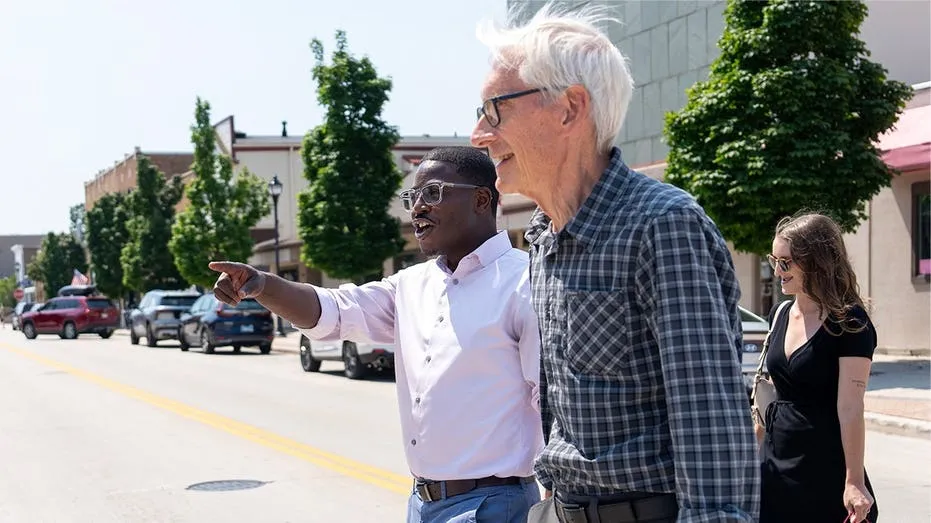
In a significant development for the Democratic Party’s internal ideological struggle, the center-left establishment has scored a notable victory. State Representative Francesca Hong, a progressive voice and member of the Democratic Socialists of America (DSA), was defeated Tuesday in her bid for the Democratic gubernatorial nomination in Wisconsin, a critical battleground state. The Associated Press reported that Milwaukee County Executive David Crowley secured the nomination, defeating Hong in a primary race closely watched as a bellwether for the party’s direction.
Establishment Backing Propels Crowley
Crowley’s campaign received substantial backing from outgoing Democratic Governor Tony Evers, who is not seeking a third term. Both Evers and Crowley had signaled concerns that a Hong victory could jeopardize Democratic control of the governor’s office, particularly in a state considered a prime target for Republican gains. The race presented Democrats with their first opportunity in 16 years to select a gubernatorial nominee without an incumbent governor on the ballot, making the primary a crucial test of whether Wisconsin Democrats leaned towards their progressive wing or the more established party leadership.
The general election will pit Crowley against Republican Representative Tom Tiffany, a member of the conservative House Freedom Caucus with the endorsement of President Donald Trump. This matchup is seen as a significant opportunity for the GOP to flip the governorship.
Hong’s Progressive Platform and Controversies
Hong, a 37-year-old former chef and single mother, had garnered support from prominent national progressives, including Representatives Ilhan Omar of Minnesota and Ro Khanna of California. Her platform included key progressive policies such as guaranteed paid leave, a significant increase in the state’s minimum wage from $7.25 to $20 per hour, and a one-year moratorium on the construction of AI data centers in Wisconsin.
However, Hong’s campaign faced considerable scrutiny over past social media statements. Years-old posts advocating for defunding and abolishing the police drew criticism, though Hong clarified her current stance, stating, “I’m not defunding the police, not abolishing police. I am serious about public safety.” She emphasized that she has evolved and learned from her past statements.
Further controversy arose from a resurfaced 2020 post where Hong suggested “canceling Thanksgiving” to avoid “celebrating colonialism.” She later walked back these comments, describing Thanksgiving as her “favorite holiday” and telling reporters that she has “evolved” and “learned” from such experiences.
Notably, Senator Bernie Sanders of Vermont, a leading figure on the left, did not endorse Hong, citing unfamiliarity with her campaign and the specific race. This lack of endorsement from a key progressive ally underscored some of the challenges Hong faced in consolidating support.
Shifting Dynamics in the Primary Field
The Democratic primary field saw significant shifts in the summer. Lieutenant Governor Sara Rodriguez and former Lieutenant Governor Mandela Barnes, both considered major contenders, exited the race. Crowley himself had initially suspended his campaign and endorsed Rodriguez before re-entering the contest and ultimately securing the nomination with the backing of Governor Evers.
Concerns Over Down-Ballot Impact
Moderate Democrats and strategists expressed concerns that Hong’s nomination could negatively impact other Democratic candidates in down-ballot races, particularly in crucial congressional and legislative contests within the battleground state. Anonymous comments from a Wisconsin-based Democratic strategist suggested that Hong at the top of the ticket might hinder the party’s broader electoral prospects.
Adding another layer to the primary dynamics, pro-Republican groups, including one associated with the Republican Governors Association, reportedly spent millions of dollars to support Hong. The strategy appeared to be that Hong would be a weaker opponent for Tiffany in the general election, thus increasing the GOP’s chances of flipping the governorship.
Tiffany’s Stance and Hong’s Response
Representative Tiffany framed the potential matchup with Hong as a defense against progressive policies, stating his state would be “the firewall… We’ll be the place that stops socialism.”
When questioned about electability concerns prior to the primary, Hong expressed confidence in the voters’ decision. “This election belongs to the voters. We let the voters decide. The candidate that’s the most electable is the one that earns the most votes,” she told reporters. “So we’re focused on meeting voters up until Election Day, until the polls close.” Despite her efforts, the primary results indicate that Wisconsin voters ultimately favored Crowley’s more centrist approach over Hong’s progressive platform.
Conclusion
The outcome in Wisconsin reflects a broader trend in some Democratic primaries where establishment candidates, often bolstered by incumbent support and concerns about general election viability, have successfully navigated challenges from more progressive contenders. While Hong’s campaign brought attention to key progressive issues, the Democratic establishment in Wisconsin ultimately opted for Crowley, aiming to maintain control of the governorship against a strong Republican challenger.


