




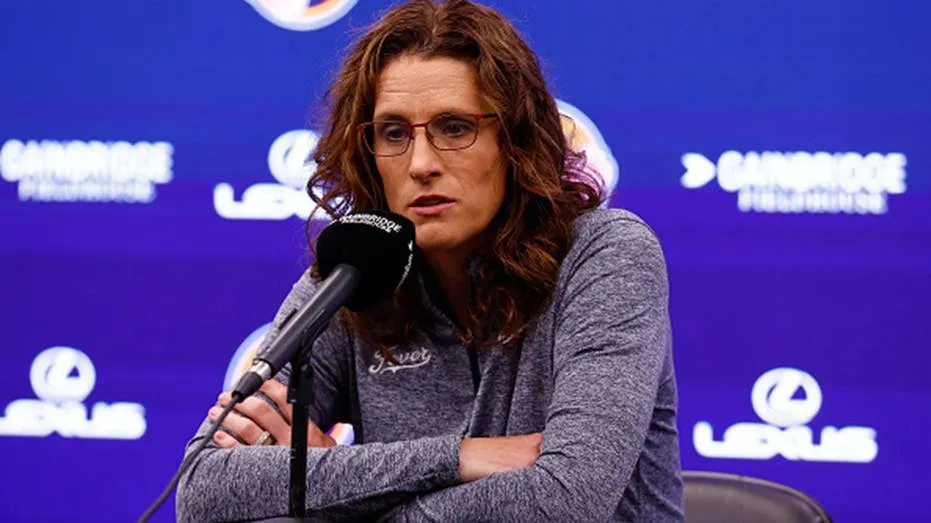
Phoenix Mercury head coach Nate Tibbetts expressed frustration Saturday with the prevailing narratives surrounding the WNBA, lamenting the league’s tendency to focus on issues he deems extraneous to the game itself. However, his critique notably sidestepped a direct examination of the controversies involving players like Sophie Cunningham and Caitlin Clark, instead focusing his defense on Indiana Fever head coach Stephanie White.
Tibbetts Voices Disappointment with League Discourse
Speaking to reporters, Tibbetts articulated his dismay at the constant “noise” surrounding the league. “It really pisses me off. It’s disappointing,” Tibbetts stated, referring to the external discussions that he believes detract from the sport. He emphasized the league’s strengths: “This is a great league. We’ve got great players. There’s great stories, great rookies, great teams.” He questioned the persistent focus on what he perceives as the “wrong stuff,” adding, “I don’t know why that happens in our league. It’s disappointing.” Tibbetts pondered the responsibility for shifting this narrative, asking, “Is it the coaches? Is it the players? Is it the media?” He also pointed to “outside sources that are trying to create division,” suggesting these elements contribute to a less-than-ideal environment.
Defense of Stephanie White Amidst Criticism
A significant portion of Tibbetts’ remarks was dedicated to defending Stephanie White, the head coach of the Indiana Fever. Tibbetts specifically addressed the criticism White has faced, particularly following a hard foul on Phoenix Mercury’s Sophie Cunningham. “We make it about basketball, but some of the things that Steph has to go through, that’s wrong,” Tibbetts asserted. He elaborated on the unique pressures White endures, stating, “There’s no other coach in any professional sport that has to go through the stuff that she does, and I think of her a lot. It’s not fair. It’s not fair.” Tibbetts concluded his defense by reiterating that White’s role is to coach basketball and that the team is capable of success when focused on the game, implying that external distractions are hindering their progress.
The Controversy Surrounding Stephanie White’s Responses
Stephanie White has drawn criticism for her perceived lack of forceful responses to incidents involving her players, most notably after DiJonai Carrington of the Connecticut Sun committed a hard foul on Sophie Cunningham, striking her across the neck. Cunningham had previously been vocal on issues concerning the protection of women’s sports, particularly in discussions about transgender athletes. Instead of offering a robust defense of Cunningham, White’s public statements were characterized as downplaying the incident. Reports indicate that White suggested Carrington harbored no ill intent and characterized the foul as a standard hard play, seemingly aiming to de-escalate the situation and move past it quickly. This approach has been seen by some as insufficient, particularly when players face what is perceived as targeted hostility, as has been suggested in the case of Caitlin Clark.
Broader Implications for WNBA Narratives
The commentary from Tibbetts highlights a recurring tension within the WNBA regarding the balance between on-court competition and broader social or political discussions. While Tibbetts aims to redirect attention toward the game itself and suggests external forces are manipulating the league’s narrative, critics argue that the league and its coaches must actively engage with and address controversies rather than attempting to ignore them. The situation underscores a debate about whether the WNBA should maintain a strict focus on basketball or acknowledge and navigate the intersection of sports with social issues. The expectation for coaches to publicly defend their players and address contentious situations remains a point of discussion, with some believing that a more assertive stance is necessary to protect players and uphold the league’s integrity.
Conclusion: Navigating the WNBA’s Public Image
Nate Tibbetts’ remarks bring to the forefront the ongoing discussion about the WNBA’s public perception and the narratives that shape it. His defense of Stephanie White, while intended to shield a fellow coach from undue pressure, also raises questions about accountability and the role of coaches in managing public discourse surrounding their teams and players. As the league continues to grow and attract attention, the challenge lies in balancing the excitement of athletic competition with the complexities of the modern media landscape and the diverse viewpoints of its stakeholders.


