
WNBA Coaches’ Trans Athlete Comments Spark Outrage Among Fans
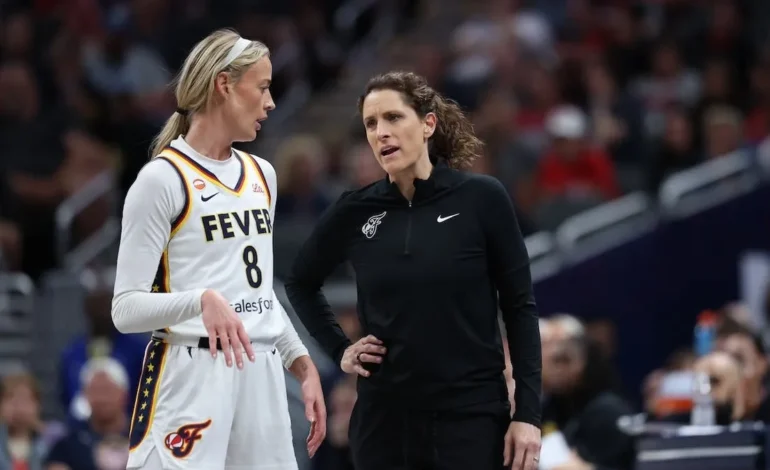

A series of comments from three WNBA head coaches regarding the participation of transgender athletes in women’s sports has ignited a firestorm of controversy among fans and observers in just two days. The debate, which has been simmering for months, boiled over following remarks made by coaches for the Indiana Fever, Portland Fire, and Minnesota Lynx, drawing criticism from various public figures and fueling online discourse.
Indiana Fever Coach’s Stance Draws Fire
The controversy began on Friday when Indiana Fever head coach Stephanie White, whose team features stars Caitlin Clark and Sophie Cunningham, was questioned about the protection of women’s sports during a pre-game press conference. White expressed hesitation in offering a definitive stance, stating, “I don’t know that I would say I’m educated enough from a scientific standpoint. I don’t ever believe that exclusion is the answer. I just don’t.” She added that she wasn’t sufficiently informed about the nuances at different levels of sports governance, recalling her own childhood experiences playing with boys.
White’s measured response was met with immediate backlash on social media, with many WNBA followers deeming it a “platitude” and insufficient. Critics included actor Rob Schneider and former NFL player Jake Ballard. The situation intensified after the game when the Fever organization faced further criticism for not making Caitlin Clark available to reporters. The press conference was reportedly cut short when an OutKick reporter attempted to question Aliyah Boston about Cunningham’s recent public support for protecting women’s sports. Even prominent sports journalist Jemele Hill weighed in, criticizing the Fever’s handling of media availability.
Portland Fire Coach’s Brief Remarks Also Scrutinized
Earlier on Friday, before the Fever’s game against the Portland Fire, head coach Alex Sarama also addressed the contentious issue. When asked about the participation of biological males in women’s sports, Sarama, like White, offered a broad statement of support for inclusivity. “My focus is as a basketball coach. To be completely honest, I don’t think I’ve ever had to think about that. I’m completely supportive of people from all communities, people from all walks of life, so that’s my stance, completely, I’m support of everyone in the Portland community,” he stated.
Sarama’s comments, though less prominent than White’s, also generated significant criticism. However, the intensity of the reaction to White’s remarks and the subsequent media handling by the Fever ultimately overshadowed Sarama’s statement as the evening progressed.
Minnesota Lynx Coach Addresses Demonstrations
The controversy continued into Saturday when Minnesota Lynx head coach Cheryl Reeve, preparing to face the Indiana Fever, was asked about the “Save Women’s Sports” rallies that have been accompanying the Fever on their recent road games. Reeve acknowledged the right of demonstrators to gather but pushed back against the framing of the debate, particularly the notion of “biological men” in girls’ locker rooms.
“It is not the case that we have ‘biological men’ in girls’ locker rooms. The way it’s being phrased, the innuendo there that transgender women are predators of some kind in the locker room. There’s a lot of narrative that is problematic that we need to address,” Reeve explained. Her remarks drew criticism from some corners but also garnered support from those advocating for transgender inclusion.
The Broader Context: Trans Athletes and the WNBA
The national conversation surrounding transgender athletes in women’s sports has significantly impacted the WNBA, largely stemming from an article last month where Sophie Cunningham voiced her support for protecting women’s sports. This stance has led to organized rallies at Fever games, drawing considerable media attention.
One such rally in Seattle resulted in controversy when the Seattle Storm’s co-owner, Celeste Keaton, was reportedly suspended and fined for her alleged interaction with young fans supporting Cunningham. A subsequent rally in Portland saw counterprotesters appear, some in costume.
With the Indiana Fever set to play the Minnesota Lynx on Sunday, the focus shifts to Minneapolis, where a third rally is anticipated. This game is being framed as one of the most high-stakes matchups of the WNBA season, amplified by the ongoing debate surrounding athlete inclusivity and the definition of women’s sports.
Conclusion: A League Divided
The recent comments from WNBA coaches highlight the deep divisions and complex discussions surrounding transgender participation in sports. While some coaches have opted for cautious, inclusive language, others have directly addressed the concerns raised by advocacy groups. The league, its players, and its coaches find themselves at the center of a national debate, with fan reactions indicating a passionate, and often polarized, audience invested in the future of women’s athletics.