




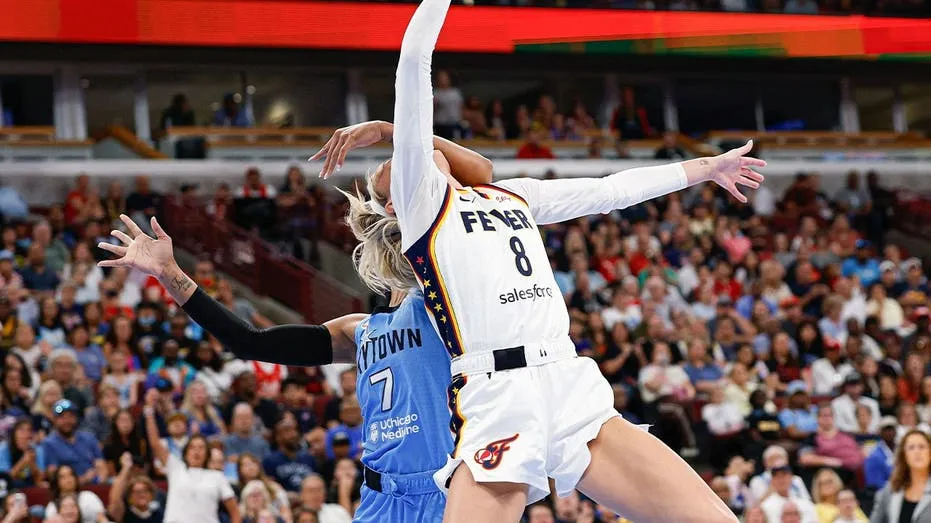
A recent on-court incident involving WNBA players DiJonai Carrington and Sophie Cunningham has ignited a fiery debate, not just about the physicality of the game, but also about the role of race and identity in sports media coverage. The controversy erupted during a game where Carrington was ejected for a flagrant foul on Cunningham, an action that left Cunningham visibly injured. Following the incident, Carrington’s subsequent social media post referencing “White privilege” from the locker room further fueled the ensuing discussion.
The Incident and Immediate Reactions
The play in question saw DiJonai Carrington deliver a hard hit to Sophie Cunningham, resulting in Cunningham bleeding from the mouth. Officials assessed the play as a Flagrant 2 foul, leading to Carrington’s ejection. In the aftermath, Carrington posted “White privilege” on social media, a statement that quickly became a focal point of the controversy. This post, coupled with the nature of the foul, prompted a range of reactions from fans and media personalities.
Several prominent sports media figures weighed in, with some defending Carrington and drawing parallels to a previous incident involving Cunningham. Jemele Hill, for instance, pointed to a moment from the previous year where Cunningham was involved in a hard foul that gained significant attention. Hill questioned whether Carrington would receive similar attention or opportunities, suggesting a potential double standard. “DiJonai Carrington receiving a Flagrant 2 and an ejection was the right call, but let’s go back to the play that made Sophie Cunningham famous,” Hill posted on social media. She added, “SC gained a million followers overnight. She is affectionately known as an enforcer. Nobody suggested she should be brought up on assault charges despite her play being clear retaliation.”
Cari Champion echoed similar sentiments, sharing Cunningham’s past foul and posing the question: “The question is a fair ask- will @dijonai be applauded? Will she gain millions of followers and marketing opportunities?” Champion also made a statement, later deleted, asserting, “League has a race problem.”
Comparing the Fouls: Context and Nuance
Critics of the media’s response argue that the comparison between Carrington’s and Cunningham’s fouls overlooks crucial distinctions. A key difference highlighted is the players’ own reactions. Cunningham, while acknowledging the physicality of her own past actions, reportedly stated that she deserved her ejection and that the situation had “nothing to do with race.” She contrasted this with Carrington’s initial claim of innocence and subsequent invocation of racial bias.
Further context provided points to an incident from the previous June involving Caitlin Clark. After Marina Mabrey shoved Clark and Jacy Sheldon slapped her, Cunningham intervened by shoving Sheldon. This action was framed by some as Cunningham defending Clark, the league’s prominent star, from hard fouls. Carrington’s career history, including an incident where she made contact with Clark’s eye, is also cited as a point of differentiation.
The narrative surrounding Cunningham’s past foul is often tied to her role as an “enforcer” and her response to perceived aggression against Clark. In contrast, Carrington’s foul is characterized by some as a “dirty play” without the same mitigating context of defending a teammate or standing up to perceived injustice.
Media Coverage Under Scrutiny
The media’s handling of the incident has drawn significant criticism. Some observers accuse outlets of downplaying Carrington’s actions and her subsequent social media post, thereby avoiding a direct confrontation with the racial dynamics she raised. Maria Taylor, hosting a discussion on NBC, reportedly characterized criticism of Carrington as “ammunition for a culture war,” a framing that some found ironic given Carrington’s own “White privilege” comment.
ESPN’s halftime show, featuring analysts Monica McNutt, Andraya Carter, Chiney Ogwumike, and Malika Andrews, also faced scrutiny for allegedly describing Carrington’s foul as “accidental” while omitting her social media post. This approach, according to critics, allows the media to frame criticism of Black players in the WNBA as racially motivated harassment, particularly when the perceived victim is a white player.
Further commentary from former ESPN anchor Cindy Brunson suggested that Carrington did not warrant a Flagrant 2, and that Cunningham was the aggressor. Brunson’s remarks, which also touched on “reverse DEI,” were seen by some as a further attempt to shift blame and complicate the narrative.
Broader Implications and Identity Politics
The debate extends beyond the specific incident, touching on broader themes of identity politics within sports. Jason Whitlock, a sports columnist, has discussed “racial idolatry,” suggesting that for some in the media, race and identity supersede objective analysis of player conduct. The argument posits that certain media figures may be inclined to defend Black women, particularly those in same-sex relationships, regardless of their actions, especially when perceived to be in opposition to white female athletes.
This perspective suggests that the media’s interpretation of events is filtered through a lens of identity, where Carrington’s actions are viewed within a framework of systemic issues, while Cunningham’s are judged more on individual conduct. The inclusion of former player Sydney Colson’s comment, “I love a trans foul,” alongside her endorsement of Carrington’s play, is presented as further evidence of this dynamic.
Ultimately, the controversy surrounding DiJonai Carrington’s foul and subsequent comments highlights a perceived divide in how sports incidents are reported and interpreted, particularly when race and identity are involved. The discussion raises questions about journalistic objectivity, the influence of social media on sports discourse, and the complex interplay of personal identity and athletic performance in the modern sports landscape.
Sophie Cunningham herself addressed the comparisons directly, stating, “I think the league is taking care of that. This has nothing to do with race. Last year, I did the same thing and I got kicked out. And I deserved to be kicked out. There’s no reason even to play that card.” Her comments underscore the differing perspectives on the incident and its underlying causes.


