
WNBA Media Defends DiJonai Carrington After Flagrant Foul, Race Accusation
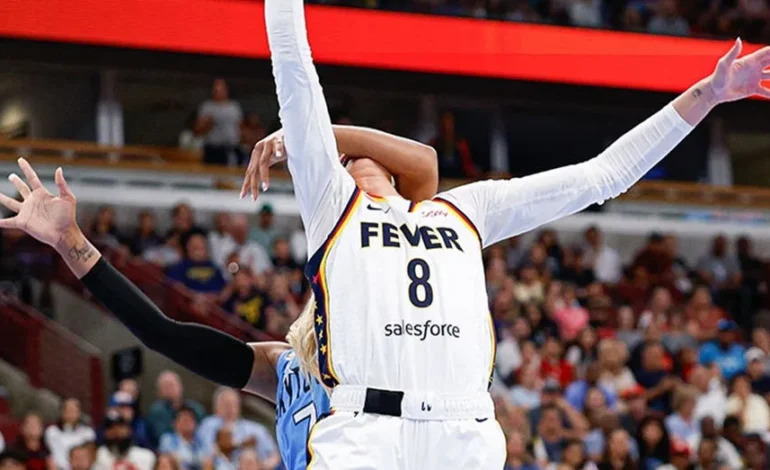

The WNBA’s media landscape faced scrutiny this past Saturday following a contentious play involving DiJonai Carrington of the Connecticut Sun and Sophie Cunningham of the Indiana Fever. Carrington was ejected from the game after receiving a Flagrant 2 foul for a hit on Cunningham, who was driving for a layup. The incident quickly escalated when Carrington, after leaving the court, posted a message on social media platform Threads accusing the Indiana Fever of “WHITE PRIVILEGE.” This response, rather than focusing on the foul itself, shifted the narrative and drew criticism for its racial framing.
Carrington’s Ejection and Social Media Post
The play occurred as Cunningham went up for a transition layup. Carrington, attempting to defend, made contact with Cunningham above the neck. Officials assessed the play as a Flagrant 2 foul, resulting in Carrington’s immediate ejection. Following her departure from the game, Carrington took to Threads, posting “WHITE PRIVILEGE @indianafever.” This post immediately ignited debate, with many questioning the timing and relevance of a racial accusation following a basketball foul.
Media Reactions and Analysis
The reaction from some prominent WNBA media figures has been a focal point of the controversy. Rather than solely focusing on the severity of the foul and Carrington’s subsequent social media post, some analysts appeared to defend or downplay the incident. ESPN analyst Andraya Carter, for instance, offered an explanation that highlighted Carrington’s aggressive playing style.
Andraya Carter’s Perspective
Carter stated, “These are plays we’ve seen from DiJonai, right? So getting in the right position, jumping over the top, getting these transition blocks. She’s always gonna make that effort. So even for some of these, she’s behind the offensive player coming over the top. So again, she was behind Sophie Cunningham. She wasn’t able to get over the top. Had she got over the top and made that play, we wouldn’t have been talking about it. She was too far behind the play. The contact above the head was too much. But that’s what DiJonai Carrington does. Like, this wasn’t, to me, because it was Sophie Cunningham making the layup.”
Critics pointed out that Carter’s own analysis seemed to contradict the defense she was attempting to build. By acknowledging that Carrington was behind the play and that the contact was excessive, her explanation that “that’s what DiJonai Carrington does” was seen by some as an insufficient justification for a dangerous foul and a subsequent racial accusation.
Allegations of Bias in Coverage
The incident has fueled accusations of a broader bias in how WNBA media covers aggression, particularly when it involves certain players. Some observers suggest that when physical plays are directed at White players, especially those who have been outspoken on certain social or political issues, there’s a tendency to rationalize the actions of the offending player. Sophie Cunningham has previously voiced opinions on athletes competing in women’s sports, a stance that has reportedly placed her in the league’s “crosshairs,” according to some interpretations.
This perspective posits that Cunningham’s public statements may have created an environment where aggression towards her is more readily excused. The narrative suggests that if a Black player commits a flagrant foul on a White player and then invokes race, the media’s response is often to explain away the foul rather than scrutinize the player’s actions and subsequent comments.
Hypothetical Scenario
To illustrate the perceived disparity, a hypothetical scenario was raised: imagine a White player making a similar dangerous hit on a Black opponent, being ejected, and then immediately posting a racial accusation. The implication is that such an event would likely receive a different, perhaps more critical, media reception.
Past Incidents Involving Carrington
This is not the first time DiJonai Carrington has been involved in a controversial play that drew significant attention. During the 2024 postseason, Carrington made contact with Caitlin Clark, the league’s star player, resulting in a visible black eye for Clark. Following that incident, Carrington reportedly mocked the public outcry online, adding another layer of controversy to her postseason performance.
The current incident, occurring less than two years later, involves another dangerous play by Carrington and a subsequent effort by some media members to shift the focus away from her responsibility, instead emphasizing her playing style or external factors.
Conclusion: Player Safety and Media Scrutiny
The core facts of Saturday’s incident remain that Carrington committed a dangerous foul, earning an ejection, and then made a post invoking race. The subsequent media coverage, particularly the efforts to explain Carrington’s conduct rather than scrutinize it alongside her social media post, has raised questions about impartiality. The debate underscores a critical point: player safety should not be contingent on the identity of the players involved, and media scrutiny ought to be applied consistently, irrespective of the racial dynamics at play.