




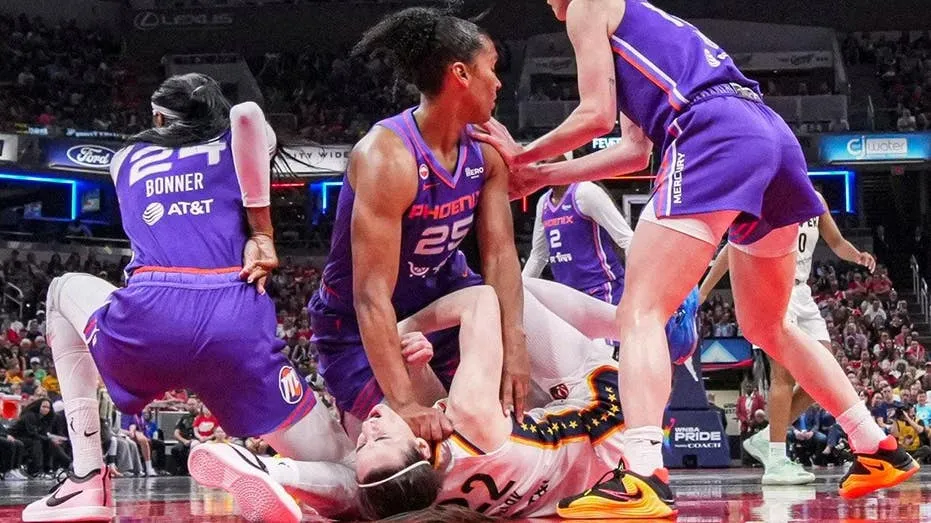
Phoenix Mercury All-Star Alyssa Thomas faces a one-game suspension following an on-court incident Wednesday night where she struck Caitlin Clark in the throat. While referees did not call a foul in real-time, a viral video clip circulating on social media has drawn significant attention and further fueled discussions about the physical treatment of Clark by opposing players, a recurring theme since her rookie season.
Suspension Issued for ‘Reckless’ Act
Less than 24 hours after the game, the WNBA announced the suspension for Thomas, citing her actions as a “reckless” and “non-basketball act.” This disciplinary measure underscores the league’s stance on player safety and conduct.
A Glimpse into Alyssa Thomas’s Background
The incident has prompted a closer look at Thomas’s career and personal history. In a 2019 interview, Thomas revealed that if she hadn’t pursued professional basketball, her alternative career paths lay in combat sports, specifically boxing or MMA. She also expressed a childhood fascination with dentistry, stemming from a love for visiting the dentist and a passion for oral hygiene.
Early Sporting Life
Thomas’s introduction to basketball at age five was reportedly met with significant resistance. Her mother, Tina, recounted that Thomas initially had an intense aversion to the sport, even resorting to a dramatic “hissy fit” when signed up for her first practice.
Parenting and Competitiveness
Her parents, Tina and her father, adopted a rigorous approach to her upbringing, even during casual games. They notably did not allow her to win during family board game sessions, such as “Candyland.” This parenting philosophy, aimed at instilling a strong sense of competition and resilience, echoes similar strategies employed by other notable athletes’ families. Thomas has credited her mother’s demanding approach for helping to develop her significant toughness.
Physical Challenges and Adaptation
Thomas currently navigates the WNBA with torn labrums in both shoulders, injuries that significantly impact her ability to perform a traditional jump shot. The severity of these injuries compromises the structural integrity needed to lift her arms effectively for shooting. Consequently, she has adapted her playing style, relying on a more forceful, one-handed push from her chest for close-range shots.
This limitation has led Thomas to heavily emphasize her physical presence. She frequently drives aggressively into defenses, absorbing contact near the basket to score. This physically demanding approach, while effective, involves initiating intense physical collisions on a regular basis. Despite these challenges and ongoing pain, Thomas has achieved considerable success, earning six All-Star selections, three First-Team All-WNBA honors, an Olympic gold medal, and establishing herself as a prominent triple-double threat in the league.
Reactions to the Incident
The on-court altercation has drawn sharp criticism from various figures. Indiana Fever Head Coach Stephanie White expressed strong disapproval, stating that “generational talent and a WNBA superstar who had two cheap shots right there that weren’t called. Absolutely unacceptable.” White characterized Thomas’s actions as “egregious and utterly disrespectful,” emphasizing the dangerous nature of the throat punch.
Fever President Kelly Krauskopf released a statement supporting the WNBA’s decision, highlighting that “Player safety should be paramount in our league. We appreciate the WNBA’s review of last night’s incident and the action taken.”
Former Minnesota Vikings captain and commentator Jack Brewer suggested that similar actions, if reversed in a different context, could be viewed as more severe. Social media platforms have also seen an outpouring of outrage from fans and observers.


