
Judge Rules ‘8647’ Flag Protected Speech Amid Rising Threats
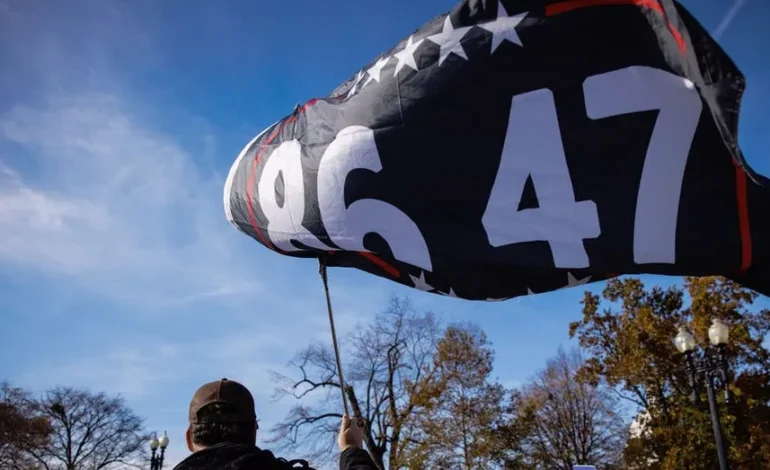

A federal judge appointed by former President Barack Obama has ruled that an anti-Donald Trump flag, featuring the message “8647,” constitutes protected political speech. The decision by U.S. District Judge Randolph Moss in Washington, D.C., represents a victory for the progressive group Accountability Now USA, which sought to fly the flag near the National Mall.
‘8647’ Flag Deemed Protected Speech
The controversy centers on the interpretation of the numbers “8647.” The number “86” is commonly used in the restaurant industry to signify removing an item or refusing service. In this context, “8647” is understood by many to mean “remove Trump,” referencing him as the 47th President of the United States. The group Accountability Now USA alleged that the National Park Service (NPS) violated their First Amendment rights by threatening to revoke their permit to display the flag.
Judge Moss, in his final ruling on Monday, determined that the flag’s message, while critical of the President, does not constitute a true threat or incitement to violence. “Its ‘8647’ flag… is not a true threat to the President or incitement of violence,” Moss stated in his opinion. This ruling allows the group to continue displaying the flag as a form of political expression.
Broader Context of Political Messaging and Threats
The ruling comes at a time of heightened concern over threats and vandalism directed at President Trump and national monuments. The Department of the Interior, in response to the case, expressed strong disapproval, with a spokesperson stating, “This opinion is from an Obama-appointed judge. Flying a flag that is a threat to the Office of the President of the United States should not be permitted under any administration.” The spokesperson questioned the loss of societal decency in not taking threats against the President seriously.
The dispute over the “8647” message gained further attention last month when the large numbers appeared etched into the grass on the National Mall between the Washington Monument and the World War II Memorial. Investigators collected grass samples from the area as part of their inquiry.
Additional Displays and Legal Considerations
In addition to the “8647” flag, Accountability Now USA also displayed two other flags accusing President Trump of sexually assaulting a minor. Judge Moss ruled that these displays were also protected under the First Amendment, finding them to be “not legally obscene.”
The judge’s previous orders in the case acknowledged the gravity of genuine threats. He noted that “a true threat to the life or safety of the President would undoubtedly outweigh the interest of the public or the speaker in continuing to urge that unlawful conduct.” However, he concluded that the “8647” message did not meet this threshold.
Judge Moss’s background includes service in the Justice Department under former President Bill Clinton and his appointment to the federal bench by President Obama. He has also been involved in supporting Democratic candidates and causes.
Heightened Security and Recent Incidents
The legal debate over the flag’s message unfolds against a backdrop of increased security measures and a series of concerning incidents. The nation’s capital is preparing for significant crowds and heightened law enforcement presence for upcoming events, including President Trump’s attendance at the “Salute to America” event on July 4th.
Recent months have seen multiple alleged assassination attempts against President Trump. In April, an incident occurred at the White House Correspondents’ Dinner, and in July, a rally in Butler, Pennsylvania, was marred by a shooting where a bullet reportedly grazed the President’s ear. Another incident involved a man arrested in Southern Florida with a rifle near where the President was golfing.
The National Mall itself has been a focal point for vandalism. Following an order for restoration and repainting of the Reflecting Pool, the area reportedly sustained damage described as “razor-blade cuts” to its lining.
Conclusion
Judge Moss’s ruling underscores the broad protections afforded to political speech under the First Amendment, even when that speech is critical or provocative. While the administration views the “8647” message as a threat, the court found it to be protected expression, distinguishing it from genuine incitement or true threats. The decision highlights the ongoing tension between free speech rights and concerns for the safety of public figures and national symbols, particularly in an era marked by political polarization and increased security challenges.