




DHS Acquires California Migrant Centers for $1.5B to Bolster Deportation Efforts
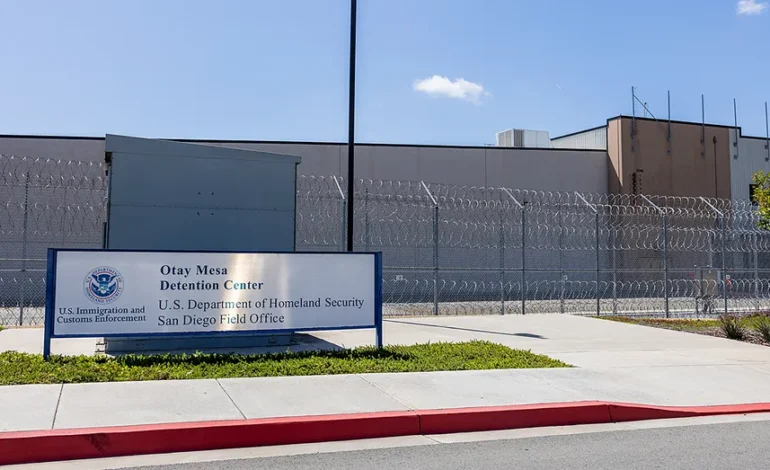

The Department of Homeland Security (DHS) has finalized the acquisition of two significant migrant detention facilities in California, a move costing $1.5 billion. This strategic purchase aims to bolster the capacity of Immigration and Customs Enforcement (ICE) to carry out deportations and enforce immigration policies. The two centers, the California City Detention Facility and the Otay Mesa Detention Center, represent two of the largest migrant holding facilities in the state, with a combined capacity of over 4,500 beds.
Federal Takeover of Key Detention Facilities
The transaction, which concluded earlier this month, saw the federal government take direct ownership of these crucial immigration enforcement assets. Previously, these facilities were operated by CoreCivic, a private prison company based in Tennessee. The acquisition was funded through a spending bill signed into law by President Donald Trump last summer, specifically allocated to enhance ICE’s detention capabilities. A DHS spokesperson confirmed the purchase, stating that the funds enabled ICE to expand detention space, aligning with the administration’s commitment to increased deportations.
This federal ownership shift is particularly significant in California, a state known for its “sanctuary policies.” These policies often restrict local and state cooperation with federal immigration enforcement, including the use of private detention facilities. By owning the centers directly, DHS can ensure continued access to detention resources on the West Coast, independent of state or local legislative changes that might hinder such operations. The DHS spokesperson highlighted that in states like California, ICE cannot rely on local partners for detention space, unlike in states such as Florida and Oklahoma. The acquisition ensures that ICE maintains the necessary detention capacity to apprehend, detain, and remove individuals residing in the country unlawfully, despite legislative efforts by California politicians to make private prisons unviable.
Financial Implications and Future Operations
For CoreCivic, the sale is expected to yield approximately $1.1 billion in net proceeds after accounting for taxes and transaction costs. Patrick Swindle, Chief Executive of CoreCivic, expressed satisfaction with the sale, emphasizing that it validates the value of the company’s real estate assets and its role as a flexible service provider to government entities. He noted that the sale provides CoreCivic with substantial financial flexibility, positioning the company for future growth and shareholder value, while maintaining its partnership with government agencies.
Despite the change in ownership, CoreCivic is expected to continue managing the day-to-day operations of both facilities under existing contracts with ICE. However, the terms of these management contracts may be subject to adjustments reflecting the new ownership structure. The contract for the California City facility is set to expire in August 2027, with an option for a five-year extension, while the Otay Mesa facility contract runs until December 2029, also with a potential five-year extension.
CoreCivic indicated that discussions are ongoing with ICE regarding the potential sale of additional detention facilities. However, these talks are in preliminary stages, and there is no certainty that further sales will materialize.
Context of Immigration Detention in California
Currently, eight ICE detention facilities are operational in California, collectively holding close to 9,000 individuals. The newly acquired California City and Otay Mesa centers are substantial additions to this network. Both facilities have previously been the subject of lawsuits filed by detainees alleging mistreatment. CoreCivic has consistently denied these allegations.
The purchase underscores a broader strategy by the DHS to enhance its operational capabilities in immigration enforcement, particularly concerning deportations. By securing direct federal ownership of key detention infrastructure, the agency aims to create a more robust and predictable system for managing the flow of migrants and enforcing immigration laws across the nation, especially on the West Coast.