



Caitlin Clark Fuels Historic WNBA Ratings Despite Limited Play
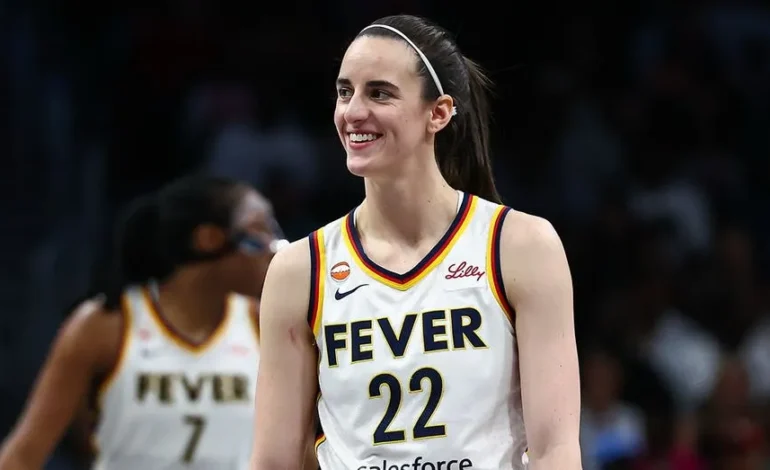

The WNBA is once again celebrating a significant television viewership milestone, this time driven by the enduring appeal of its newest superstar, Caitlin Clark. Even a limited return from injury for Clark and a late-night cable slot couldn’t prevent a game between the Indiana Fever and the Los Angeles Sparks from drawing an impressive average audience of 1.04 million viewers on Wednesday night, according to USA Sports PR.
Clark’s Impact on Cable Viewership
The Indiana Fever ultimately lost the contest to the Sparks, 106-92. Clark herself played only 16 minutes, marking her return after a two-week absence due to a back injury. However, the circumstances surrounding the viewership numbers underscore their significance. A million viewers is a substantial figure for any WNBA game, but it’s particularly noteworthy given the broadcast conditions.
The game aired exclusively on USA Network and CNBC, bypassing more prominent broadcast channels. Furthermore, it was not a prime weekend slot but a Wednesday night affair in Los Angeles, kicking off at 10 p.m. Eastern Time. Despite these challenging factors, the game surpassed the one-million-viewer mark.
Data from Nielsen Big Data + Panel, as cited by USA Sports PR, revealed that the Fever-Sparks matchup became the most-watched WNBA game in the network’s history. It saw a remarkable 149% increase compared to the 2025 cable average. Crucially, this game also marked the first time in WNBA history that a game starting at 10 p.m. ET has achieved an average viewership of at least one million.
Contextualizing the Numbers
To fully appreciate this achievement, it’s helpful to compare it with previous high points in WNBA viewership. Earlier in the season, Indiana’s opening weekend game against the Dallas Wings garnered 2.49 million viewers on ABC, making it the fourth-largest audience since 2000, including playoffs and All-Star Games. Another game featuring Clark and the Fever against the New York Liberty on CBS drew 2.56 million viewers, ranking as the third-largest WNBA audience of any kind in the same period.
While those numbers on major broadcast networks highlight Clark’s immense popularity, the recent cable-only, late-night figure tells a different, perhaps even more compelling, story. It demonstrates Clark’s ability to draw a significant audience to the WNBA even under less-than-ideal viewing conditions – mid-week, on cable, and late on the East Coast.
The league’s history with million-viewer games is sparse. Before Clark’s arrival, the WNBA went nearly 16 years without a single game reaching that threshold. The last such game occurred in 2008 when Candace Parker’s highly anticipated professional debut averaged 1.07 million viewers on ABC. That game benefited from a prime Saturday afternoon slot and a major broadcast network, setting a previous ceiling that seemed distant.
The Game Itself and Clark’s Performance
The on-court action for the Fever-Sparks game was not a highlight reel for Indiana or their star player. Clark, returning from the back injury she sustained on June 24 against the Phoenix Mercury, scored just nine points in her 16 minutes of play. The Fever trailed for the entire second half, unable to close the deficit to less than nine points in the final quarter.
Broader League Growth vs. Clark’s Influence
The WNBA and its media partners often emphasize the league’s growth as a broader narrative in women’s basketball. There is undeniable truth to this; the league is in a stronger position than ever, with increased visibility. However, the most significant television ratings continue to be directly linked to Caitlin Clark.
Data indicates that the five most-watched WNBA games this season have all featured the Indiana Fever. Interestingly, the Fever have also managed to draw strong viewership even in games where Clark has not participated. For instance, Indiana’s game against the Las Vegas Aces on July 5, played without Clark, averaged 1.55 million viewers on ESPN’s “Women’s Sports Sundays.” At the time, this was the season’s largest cable or streaming WNBA audience.
This phenomenon, rather than serving as an argument against Clark’s impact, actually reinforces it. Her presence has transformed the Indiana Fever into the WNBA’s most valuable television asset. The team now commands national interest on a scale previously unseen. The fact that Fever games draw larger audiences even when Clark is sidelined suggests that her initial impact has elevated the entire team’s profile, making them compelling viewing regardless of her immediate participation.
Consider the viewership for games without the Fever: The 1.55 million viewers for the July 5 game significantly surpassed the combined viewership of the two preceding “Women’s Sports Sundays” on ESPN, which featured games without the Fever (Liberty-Valkyries at 743,000 viewers and Liberty-Sparks at 778,000). While the WNBA is undeniably growing, with even non-Fever games drawing substantially more viewers than in the pre-Clark era (over 700,000 is a massive leap), the league’s most historic ratings consistently have one common denominator: Caitlin Clark.
Conclusion: A Star-Driven Era
The latest viewership figures, achieved under challenging broadcast conditions, further solidify Caitlin Clark’s status as a transformative figure for the WNBA. Her ability to draw massive audiences, even when playing limited minutes or on less desirable time slots, highlights her unique appeal and her role in elevating the league’s profile. While the WNBA experiences broader growth, Clark remains the central catalyst for its most significant television achievements, underscoring the powerful impact of star players in driving sports viewership.