

Caitlyn Jenner’s ‘Simple’ WNBA Trans Athlete Solution
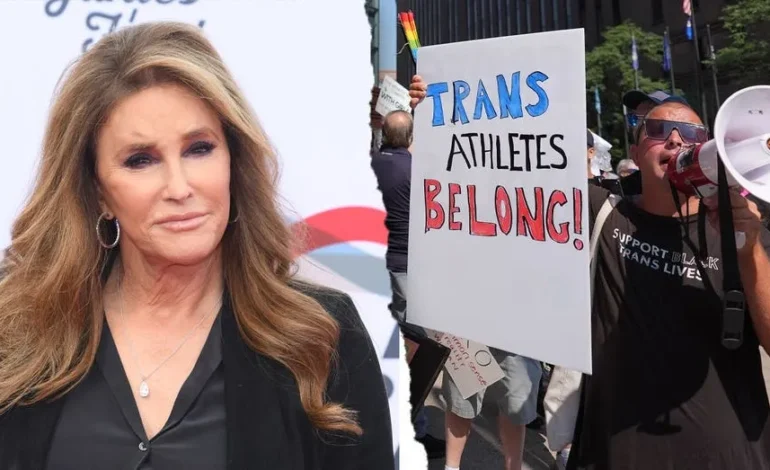

Caitlyn Jenner has weighed in on the ongoing debate surrounding transgender athletes in the WNBA, proposing what she describes as a straightforward resolution to the league’s current controversy. The WNBA has faced scrutiny over its policies regarding the eligibility of transgender women to compete, a situation that has also seen former NBA players Enes Kanter Freedom and Royce White make bids to join the league, seemingly to highlight the issue.
Jenner’s Proposed Solution
Appearing on “Fox News @ Night” with Trace Gallagher, Jenner asserted that the situation presented a clear case of hypocrisy within the WNBA. She commented on Kanter and White’s actions, suggesting they were effectively exposing this inconsistency. Jenner recounted that WNBA Commissioner Cathy Engelbert had indicated the league had discussed the matter of transgender participation but had not yet reached a definitive conclusion, stating, “We talked about the trans issue but we just haven’t come up with a conclusion at this point. We will continue the conversation.”
Jenner’s proposed solution, however, is far more direct. “Cathy, XX, you’re in. XY you’re out. It’s that simple,” she stated, referencing biological sex markers as the determinant for eligibility. She believes that Kanter and White are performing a valuable service by illustrating the league’s perceived hypocrisy and emphasized the importance of safeguarding women’s sports. Jenner highlighted Title IX as a landmark piece of legislation that significantly advanced women’s equality, particularly within the realm of sports.
The WNBA’s Collective Bargaining Agreement
The WNBA’s current collective bargaining agreement (CBA) addresses player eligibility in Article XIII, Section 1(a), which stipulates: “Only players who are women are eligible to play in the WNBA.” However, a closer examination of the 409-page document reveals a notable omission: the terms “woman” or “women” are not explicitly defined. Furthermore, the agreement makes no mention of “transgender” or “gender identity,” despite providing detailed definitions for numerous other terms.
This lack of definition in the CBA has become a focal point of the debate, leaving the criteria for who qualifies as a woman eligible to play in the league open to interpretation. While the league has stated its commitment to inclusivity, the absence of clear definitions has fueled discussions and concerns among various stakeholders.
WNBA’s Stance and Response
In response to the growing discourse, a WNBA spokesperson confirmed that the league had convened meetings to address a “wide range of topics.” Among these were ongoing discussions concerning transgender athletes and the “continued hate and vitriol directed at players online.” The league issued a strong statement denouncing “bad-faith efforts to use these topics to demean or marginalize others.”
This statement underscores the WNBA’s position that discussions around transgender inclusion are being held, while also condemning what it perceives as malicious attempts to exploit the issue for harmful purposes. The league maintains that its policies are under review and that it is committed to fostering a respectful and equitable environment for all athletes.
Broader Implications for Women’s Sports
Caitlyn Jenner’s comments tap into a broader, often contentious, conversation about fairness and inclusion in women’s sports. The core of the debate, as Jenner frames it, revolves around the definition of a woman and the potential impact of including transgender women in female athletic competitions. Proponents of stricter eligibility criteria often cite the biological advantages that some argue transgender women may retain, potentially affecting competitive balance.
Conversely, advocates for transgender inclusion emphasize the importance of gender identity and the need for sports to be accessible and affirming for transgender individuals. They argue that excluding transgender women is discriminatory and that many transgender athletes do not possess significant competitive advantages, particularly after hormone therapy. The WNBA’s situation highlights the complex challenge sports organizations face in balancing these competing perspectives.
The involvement of figures like Enes Kanter Freedom and Royce White, who have publicly stated their intentions to pursue WNBA careers, serves to amplify these discussions. Their actions, regardless of their ultimate success, have undeniably brought increased attention to the league’s policies and the underlying societal debates about gender and sports. Jenner’s call for a simple XX/XY distinction reflects a viewpoint held by many who prioritize biological sex in sports categorization, arguing it is the most straightforward way to uphold the integrity of women’s sports as originally conceived under legislation like Title IX.
Ultimately, the WNBA finds itself at a crossroads, tasked with navigating a sensitive issue that intersects with legal, social, and ethical considerations. The league’s ongoing dialogue aims to find a path forward that respects both the principles of inclusivity and the specific context of women’s sports, a challenge that Jenner believes has a readily apparent solution, even if the league itself is taking a more deliberative approach.