


House GOP’s SAVE Act Plan Faces Conservative Opposition
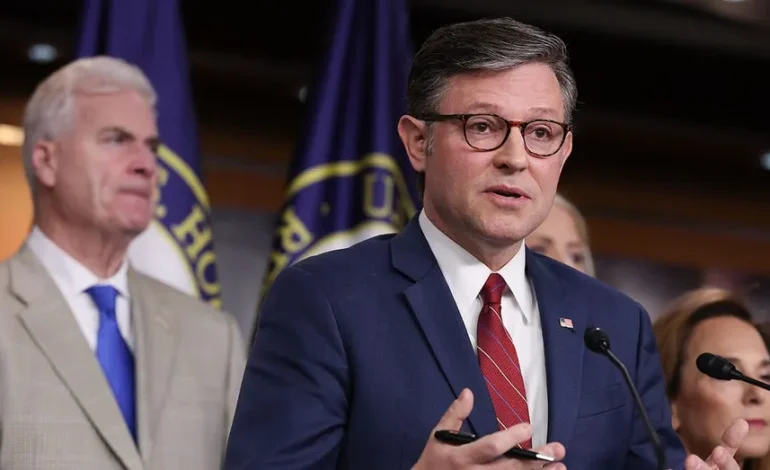

House Republican leaders are attempting a fresh strategy to advance the stalled SAVE America Act, aiming to overcome resistance from a bloc of conservative lawmakers that previously halted floor proceedings. The plan involves a procedural maneuver to attach the election integrity measure to the annual defense policy bill, a move that has itself drawn criticism from within the party.
A Risky Maneuver for the SAVE America Act
The House Rules Committee approved a rule on Monday, by an 8-4 vote, that would bundle the defense authorization bill with the SAVE America Act. This combined package is then intended to move to the Senate. However, the conservatives who previously blocked the bill remain unconvinced. Representative Chip Roy of Texas, a member of the Rules Committee and one of the lawmakers who supported the earlier blockade, abstained from the vote.
Representative Anna Paulina Luna of Florida, a leading voice among the SAVE Act proponents, expressed skepticism about the current approach. She argued that simply attaching the SAVE Act to the defense bill wouldn’t guarantee its passage in the Senate. Luna believes the most effective path is to incorporate SAVE-related amendments directly into the text of the National Defense Authorization Act (NDAA).
“The only way to ensure the Senate passes this is to make sure it’s in the bill text of the NDAA, meaning that my amendment(s) must be made an order,” Luna stated on social media platform X. She further elaborated, “I’m not trying to be difficult, but this is what 80% of Americans want and what we promised the American people, so I stand by my decision.”
Leadership’s Push Amidst Internal Divisions
Speaker Mike Johnson’s proposal follows an unsuccessful attempt last week to advance parts of the SAVE Act through a separate legislative vehicle, dubbed the ‘Big Beautiful Bill’ by proponents. With the slimm Republican majority in the House, securing the support of these conservative members is crucial for leadership to pass procedural rules, including the one debated on Tuesday. Typically, such procedural votes fall along party lines, meaning Johnson can only afford to lose a small number of Republican votes.
The vote on Tuesday was also set to advance a spending bill for the State Department and foreign operations for fiscal year 2027. Additionally, it included a resolution commemorating the anniversary of a legislative act previously championed by former President Donald Trump, now referred to by Republicans as the Working Families Tax Cuts.
Failure to advance these legislative items could lead to the House floor becoming inactive, potentially prompting lawmakers to adjourn for the upcoming July 4 recess. Speaker Johnson has characterized the ongoing blockade as a “self-defeating” strategy, telling reporters, “It doesn’t make any sense. We have to move forward with legislation and that’s what I’ll be telling them all.”
Conservative Stance and Democratic Scrutiny
Despite leadership’s appeals, Luna indicated her continued reluctance to allow the House floor to resume normal operations without clearer assurances regarding the SAVE America Act’s prospects in the Senate. “But to, you know, say that we’re holding up the process. This is legislating,” Luna remarked to reporters on Monday, standing alongside Representative Tim Burchett of Tennessee, another supporter of the SAVE protest. She added, “If people elected us to just come up here and vote in line with what the party wants, then it would be a whole lot different.”
Democrats, who generally oppose the SAVE Act and the procedural tactics, have voiced their own criticisms. They argue that the conservative holdouts are being misled, as the SAVE Act, even if attached to the defense bill, faces significant hurdles in the Senate. Representative Jim McGovern of Connecticut, during the Rules Committee debate, stated, “The Senate will just strip the SAVE Act out.” He further contended, “They’ve already said that merging it with the NDAA bill doesn’t prevent that. Nothing in this rule will prevent that.” McGovern characterized the maneuver as a “cover-your-behind” tactic with a “0% chance SAVE ends up in the NDAA because of this rule today.”
Uncertain Future for SAVE Act Provisions
The rule approved by the committee is designed to allow the SAVE Act to be attached to the NDAA without a separate vote on the election measure itself. However, the version of the SAVE Act being considered does not include all the priorities previously advocated by former President Trump, such as stricter limitations on mail-in voting or prohibitions on transgender athletes in women’s sports and gender-affirming care for minors. Speaker Johnson has not yet brought a more comprehensive version of the election bill before the House, and the feasibility of measures like a crackdown on mail-in ballots clearing the chamber remains uncertain.
The push for the SAVE Act faces considerable headwinds, particularly in the Senate, where Republican leaders acknowledge it lacks sufficient support to pass. The measure has struggled to achieve unified backing even within the Republican party, falling far short of the 60 votes needed to overcome a potential Democratic filibuster.
Trump’s Appeal to Senators
Former President Trump himself has publicly urged Republican senators to support the SAVE Act. He specifically called out Senators Lisa Murkowski, Susan Collins, Thom Tillis, Bill Cassidy, and Mitch McConnell on social media, stating they “must vote to SAVE OUR COUNTRY.” Trump concluded his post with a firm declaration: “There can be no more excuses!”