



Iran Strengthens Ties with Russia, China Amidst U.S. Sanctions Pressure
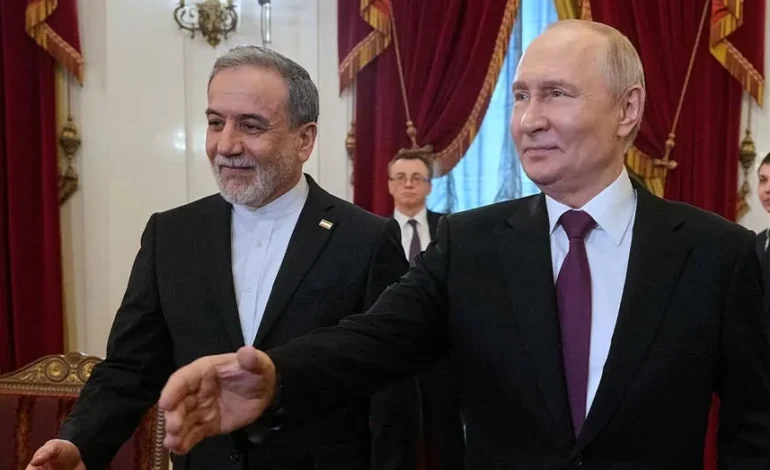

As the United States intensifies its economic pressure campaign against Tehran, Iran is reportedly bolstering its financial and military connections with Russia and China. Regional security analysts suggest this strategic deepening of ties with non-Western powers serves as a crucial lifeline, enabling Iran to navigate U.S. sanctions and counter Washington’s renewed “maximum pressure” strategy. This development positions Iran as a central player in a growing network that challenges American global influence.
Iran’s Strategic Pivot Amidst U.S. Sanctions
The intensifying economic warfare, described by President Donald Trump as the “most crushing economic operation ever taken against any country,” aims to isolate Tehran by penalizing any nation or business providing it with economic support. Trump’s administration has signaled severe consequences for entities that defy these measures, emphasizing an “unprecedented scale” of economic isolation.
Behnam Ben Taleblu, a senior director at the Foundation for Defense of Democracies (FDD), explained that Iran’s survival hinges on its ability to adapt to multifaceted pressures, including not only military threats from the U.S. and Israel but also significant economic and political challenges from Washington. “There’s no doubt the Islamic Republic is looking to maximize its enmeshment with countries like Russia and China that have been subject to U.S. political and economic pressure in the past,” Taleblu noted.
BRICS and SCO: New Avenues for Cooperation
Iran is increasingly leveraging economic and security alliances such as BRICS (Brazil, Russia, India, China, South Africa, and expanded member nations) and the Shanghai Cooperation Organization (SCO), a Eurasian alliance led by China and Russia. These blocs are becoming instrumental in Iran’s efforts to forge stronger international partnerships and circumvent U.S. sanctions.
Abdolnasser Hemmati, the governor of Iran’s Central Bank, announced that Tehran is poised to join the BRICS-affiliated New Development Bank. While the bank has not officially confirmed Iran’s membership, Hemmati stated, “The most important result of cooperation among BRICS member countries is the establishment of the New Development Bank, and our country will soon become a member of this bank.”
Taleblu elaborated on Iran’s strategy, stating, “You can see Iran trying to benefit from its role in BRICS, as well as a constellation of other organizations, that really would allow itself to be shielded—or try to make itself more shielded—from U.S. political and economic pressure.” He added that Iran seeks deeper integration into economic frameworks established by Russia and China, nations actively working to diminish the dominance of the U.S. dollar and challenge American global power.
“It is quite key and important for policymakers in Washington to wake up and see how interconnected these state threats are becoming,” Taleblu cautioned, highlighting the growing convergence of nations seeking alternatives to the U.S.-led international order.
Military and Technological Support from Russia
Beyond economic cooperation, reports indicate that Russia is providing Iran with crucial military supplies. According to a European government document verified by a Western official, Russia has been supplying Iran with ammunition, drone components, and TNT via Caspian Sea shipping routes. This military assistance is seen as vital for Iran’s efforts to adapt to and withstand U.S. pressure.
“Even limited technology and military flows from Russia to the Islamic Republic help it fight to survive, adapt, and live another day to combat the U.S. order in the region,” Taleblu observed. He suggested that the immediate costs of engaging within this emerging “anti-American authoritarian order” are lower than those associated with aligning with the pro-American bloc.
Iran’s Dual Role in Global Geopolitics
Taleblu further characterized Iran’s position within a broader geopolitical landscape, describing it as a “linchpin” connecting state-level threats with non-state actors. He identified Iran as a key component of what he terms the “Axis of Aggressors,” a coalition of authoritarian states including Russia, China, and North Korea. Simultaneously, Iran remains central to the “Axis of Resistance,” its network of regional proxy groups such as Hamas, Hezbollah, the Houthis, and various Shiite militias in Iraq.
“They all have hostile intentions towards the U.S. and the liberal world order. They are authoritarians at home and creditors abroad,” Taleblu stated, underscoring the shared ideological and strategic objectives among these aligned nations.
He emphasized that even if Iran’s economic aspirations within BRICS do not fully materialize, the political and military backing it receives from Moscow and Beijing remains significant. “So even if what the Islamic Republic wants from the BRICS countries, particularly the likes of Russia and China, doesn’t happen, that doesn’t mean that political, economic, and military support to this regime at a critical time is not happening.”
Taleblu concluded by reiterating Iran’s pivotal role: “The linchpin between the state threats that the U.S. faces in the 21st century, from the Axis of Aggressors and the non-state threats in the Middle East, is the Islamic Republic of Iran. It is actually a bridge for capabilities, money, and technology from states to flow to non-state actors.” This interconnectedness, he warned, presents a complex challenge for U.S. foreign policy.