




UC’s ‘Test-Blind’ Admissions Policy Called a ‘Terrible’ Mistake
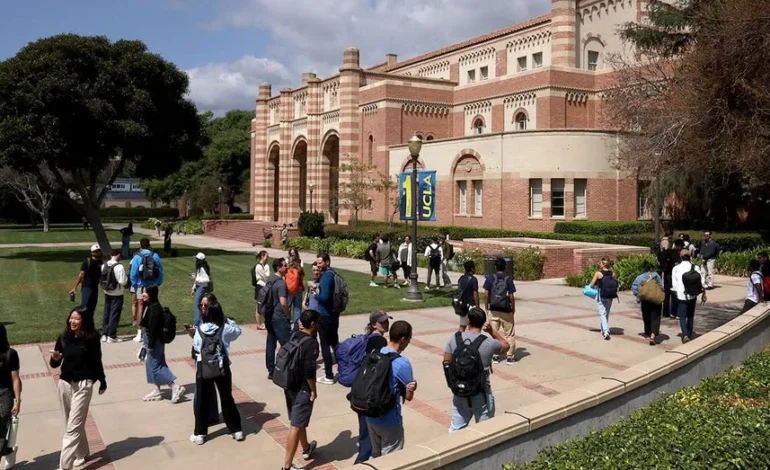

The University of California system is facing renewed pressure to reconsider its decision to eliminate standardized test scores from undergraduate admissions. The New York Times Editorial Board, in an editorial published Monday, has labeled the move a “terrible” mistake that may be leaving students less prepared for the rigors of college coursework. This critical assessment comes as the UC Board of Regents prepares to discuss the policy, which has been in place for over six years.
A Shift Away from Standardized Testing
The UC system’s journey away from standardized tests began in 2019 when the Board of Regents established the 18-member Standardized Testing Task Force (STTF). This committee, composed of professors from across the UC’s 10 campuses, was charged with examining the role of standardized test scores in undergraduate admissions. After approximately a year of study, the task force released a comprehensive 225-page report.
The STTF’s findings indicated that standardized test scores were indeed valuable predictors of crucial aspects of student success, including undergraduate grade point average (UGPA), retention rates, and overall completion of degree programs. Despite this conclusion, the UC system voted in 2020 to adopt a “test-blind” approach, meaning that test scores would not be considered in admissions, even if submitted by applicants. This decision was made amidst the burgeoning COVID-19 pandemic.
Concerns Over Declining Academic Preparedness
The New York Times Editorial Board contends that the consequences of this “test-blind” policy have been “terrible.” They point to a recent report from a faculty group at UC San Diego, which highlighted a significant decline in the academic readiness of incoming students. Specifically, the editorial noted that in the fall, nearly 12 percent of first-year undergraduates at UC San Diego were not qualified to enroll in pre-calculus, a foundational college-level course. This figure stands in stark contrast to the mere 0.5 percent in 2020.
While acknowledging that broader educational challenges, such as the rise of artificial intelligence, pandemic-related school closures, and smartphone distractions, have emerged, the Times argues that the drop in preparedness among UC students is more pronounced than regressions observed elsewhere. This disparity, the paper suggests, underscores the impact of the UC system’s test-blind policy.
Faculty Voices Call for Reversal
The debate over standardized testing is not confined to editorial pages. A significant number of UC faculty members have also voiced concerns and urged the university to reverse its test-blind stance. Two separate letters have been sent to university leadership. One letter, signed by over 2,300 faculty members in Science, Technology, Engineering, and Mathematics (STEM) fields, warned that “Obscuring preparation gaps harms both students individually and the University collectively. It offers the appearance of access while undermining the chance of success.” A similar letter from more than 900 UC humanities faculty members echoed these sentiments.
In response to inquiries about the policy, a spokesperson for the University of California highlighted a statement from UC Academic Senate Chair Ahmet Palazoglu. Palazoglu affirmed that academic preparedness and student success are paramount priorities. He stated that the UC faculty Academic Senate is undertaking a thorough, data-driven review to determine the best methods for assessing college readiness and supporting student success within the UC system. This review, he noted, is intended to be more extensive than previous efforts, given the significant shifts in the educational landscape since the test-blind policy was adopted in 2020. The review is being led by the UC faculty Board of Admissions and Relations with Schools (BOARS), acting under authority delegated by the Board of Regents.
A Wider Trend Towards Reinstatement
The University of California’s move to a test-blind policy in 2020 was not an isolated decision; many institutions similarly adjusted their admissions practices during the pandemic. However, a notable trend has emerged since then, with numerous universities opting to reinstate standardized test requirements. Some have adopted a “test-optional” approach, allowing students to choose whether to submit scores, while others have returned to requiring them for admission.
Prominent institutions now requiring test scores include Harvard, Brown, Georgia Tech, Purdue, Yale, Princeton, Stanford, and the California Institute of Technology. Even prestigious military academies like the Naval Academy and West Point maintain standardized test requirements.
The New York Times also referenced Brown University President Christina Paxson, who has argued that standardized test scores can be more reliable predictors of academic performance than high school grades alone. While acknowledging valid concerns about the tests themselves, Paxson suggested that the question of whether their benefits outweigh their drawbacks is an empirical one.
The Path Forward
The ultimate decision on whether to reverse the test-blind policy rests with the UC Board of Regents. The New York Times Editorial Board urged the regents to “have the courage to admit they made a mistake six years ago and reverse it” when they next convene. The editorial board’s strong stance reflects a growing sentiment among some educators and institutions that standardized tests, despite their imperfections, play a vital role in evaluating student preparedness for higher education.
Janet Napolitano, who served as UC president in 2020 and supported the test-blind policy, has reportedly indicated that while the policy was a “worthwhile experiment,” its results now make it “increasingly clear that the experiment needs to be revisited.” This sentiment from a former key proponent further highlights the evolving discussion around admissions criteria within the University of California system.