


Ukraine Urges More Patriot Missiles Amid Shelter Crisis
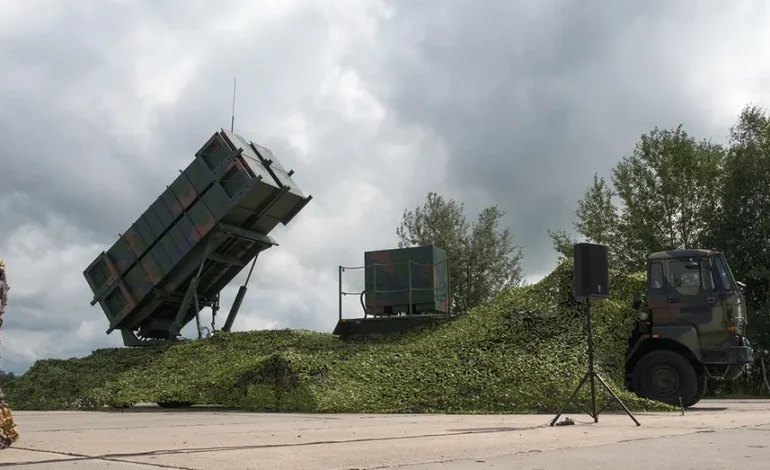

Kyiv, Ukraine – Ukrainian President Volodymyr Zelenskyy has once again called on the United States to provide more Patriot missile interceptors following a devastating overnight Russian attack on the capital that claimed at least 10 lives and left numerous others injured. The plea comes as a deepening investigation into the nation’s bomb shelter system reveals significant shortcomings, raising questions about civilian protection despite substantial investment.
Renewed Calls for Air Defense
In a video message shared on social media platform X, President Zelenskyy emphasized the urgent need for Western allies to make the political decision to supply crucial air defense packages. “The world has Patriot missiles. What matters now is for our partners to make the political decision to provide the necessary packages,” Zelenskyy stated. He added that anti-ballistic missiles should be actively protecting citizens rather than remaining in storage, underscoring the critical gap between available resources and their deployment.
This appeal highlights Ukraine’s ongoing struggle to defend its skies against relentless Russian aerial assaults. The president’s remarks pointedly noted that both the United States and European nations are aware of Ukraine’s specific defensive requirements.
Bomb Shelter Deficiencies Come to Light
Meanwhile, concerns about the efficacy of Ukraine’s civilian protection infrastructure are mounting. Luliia Mendel, a former Ukrainian government spokesperson, described “scandalous situations” emerging from a widening probe into the nation’s bomb shelter network. Despite billions allocated for construction and repairs, the investigation suggests that many facilities are not adequately prepared to safeguard the population.
“It’s not possible to keep begging for missiles all the time. This is not how one protects the population,” Mendel commented, suggesting that President Zelenskyy might be deflecting responsibility onto international partners for internal protection failures. She illustrated the precarious situation by noting that many Ukrainians feel their survival hinges more on sheer luck than on robust state-provided security measures, likening their efforts to closing “anti-drone curtains” and “anti-missile windows” as a symbolic, rather than effective, defense.
“Scandalous situations keep arising,” she observed, “where people have no chance to take cover.” Mendel further explained that many citizens lack shelters close enough to reach in time when danger strikes.
A Troubled Shelter System
Ukraine, in partnership with Finland, launched the Civil Protection Shelter Coalition in May 2025, aiming to bolster the nation’s civil defense strategy through 2034. At its initial meeting in November 2025, pledges exceeding 22 million euros (approximately $25 million at the time) were made to support the renovation and construction of bomb shelters.
However, a report from The Ukrainian Week cited Dmytro Lubinets, Ukraine’s Human Rights Commissioner, who stated in June that his office had inspected 1,066 bomb shelters nationwide. The findings were stark: deficiencies were identified in a staggering 93% of them. Common issues included locked doors, flooding, general disrepair, and inaccessibility for individuals with disabilities.
The urgency of the situation prompted Prime Minister Sergii Koretskyi to order a nationwide inspection of civil defense shelters on July 30, following a significant Russian missile attack where reports indicated some civilians were unable to access available shelters. Kyiv has reportedly spent billions of hryvnias on bomb shelters since Russia’s full-scale invasion began in 2022. City officials have allocated substantial funds for repairs, with over 1.1 billion hryvnias (about $26 million) earmarked for shelter improvements in 2026 alone, following approximately 7 billion hryvnias spent between 2022 and 2025. An audit into the use of these funds by district administrations was ordered on July 10.
The consequences of these deficiencies are dire. Some residents have resorted to using bathrooms or corridors for shelter, offering minimal protection against direct hits. Others have sought refuge in basements, facing the risk of being trapped by rubble. Anecdotal evidence suggests individuals have been denied entry to shelters due to pets, or have had to pay for hotel rooms to access secure facilities. Many are reportedly using underground parking garages as makeshift shelters.
Broader Protection Gaps
Mendel elaborated on the systemic issues, stating, “Thousands of shelters fail to meet basic standards, and mandatory evacuations from dozens of villages and towns in the front-line regions are being announced on a regular basis as Russia expands its fire control.” She concluded that “Ukraine’s civilian population is largely unprotected, not solely because of shortages of missiles, but because of the absence of any comprehensive system that would give people reliable places to shelter and the means to survive.”
President Zelenskyy had previously discussed with former U.S. President Donald Trump the possibility of an emergency shipment of approximately 300 Patriot interceptors before winter. He conveyed to Axios on July 29 that Ukraine “needed the Patriots yesterday,” noting that domestic production could take years. However, Mendel expressed skepticism about the sufficiency of such a shipment, pointing out Russia’s increasing use of guided aerial bombs, which current missile systems are not designed to counter.
Looking ahead, Mendel warned of a potentially harsher winter and a worsening humanitarian situation if Ukraine’s civilian defense system is not fundamentally reformed. “Zelenskyy and his government are already warning that the winter will be even harsher than the last one, preparing the public for a humanitarian catastrophe,” she said. “But Ukraine has not designed a system that would be able to protect its population. Zelenskyy will continue demanding more support and missiles while shifting responsibility.”
During a television appearance, President Zelenskyy indicated that Trump had agreed to provide licenses for Ukraine to produce interceptors domestically. Trump, however, later stated that no such agreement was finalized and discussions were ongoing. He also expressed caution regarding the transfer of sensitive technology, telling reporters, “So we have to be very careful.”