



African, Caribbean Leaders Demand Slavery Reparations, Debt Relief

Global Push for Slavery Reparations Gains Momentum
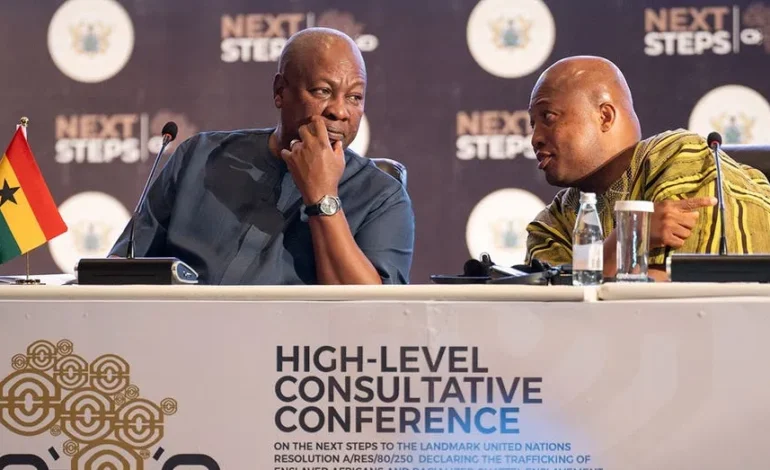
Leaders from African and Caribbean nations have coalesced around a comprehensive plan demanding financial compensation, debt cancellation, and formal apologies from countries that profited from the transatlantic slave trade. This unified approach was formalized during a recent conference in Ghana, where a 19-point framework was adopted.
Key Demands Outlined in Reparations Plan
The sweeping proposal advocates for a range of measures, including direct financial compensation, substantial debt relief, the establishment of a Global Reparations Fund, and the repatriation of looted cultural artifacts and ancestral remains. Furthermore, the plan calls for significant reforms to international financial institutions, which proponents argue currently disadvantage developing nations.
This coordinated push for reparations is expected to be presented at the upcoming United Nations General Assembly. The framework was officially adopted by the African Union and the Caribbean Community (CARICOM) Commission on Reparatory Justice following a three-day summit.
Historical Responsibility and Future Actions
Ghanaian President John Dramani Mahama addressed delegates, stating, “History does not ask us to inherit guilt, but it asks us to inherit responsibility.” While the proposal does not yet name specific countries for compensation or apologies, it clearly outlines a path forward.
The plan also includes calls for debt cancellation, climate justice financing, expanded pathways for citizenship for Africans in the diaspora, and what organizers term a “right of return” for descendants of enslaved Africans. A directive for African nations to preserve former slave forts and castles as memorial sites is also part of the framework.
The Enduring Legacy of Slavery
Advocates point to the grim reality that an estimated 12.5 million Africans were forcibly transported across the Atlantic in ships between the 15th and 19th centuries. The ongoing effects of this brutal history, supporters argue, continue to impact communities across Africa and the Caribbean generations later.
This significant conference follows a recent UN vote in March that recognized the transatlantic slave trade as the “gravest crime against humanity.” The resolution garnered substantial support, with 123 nations voting in favor, though the United States, Israel, and 52 other countries either opposed or abstained.
Concerns have been raised by the United States and the European Union regarding the potential for such resolutions to create a hierarchy of crimes against humanity. However, leaders from Namibia, Liberia, Senegal, Barbados, and Sao Tome and Principe, among other nations, were present at the Ghana conference, underscoring the broad regional commitment to this cause.
French President Acknowledges Suffering
French President Emmanuel Macron addressed the gathering virtually, acknowledging the profound suffering inflicted by slavery. He described how enslaved people were “torn from their homelands, deported, dehumanised, and treated as goods.” Macron also emphasized that reparations should not be seen as a definitive conclusion but rather as part of an ongoing process.
The conference successfully consolidated various reparation efforts previously undertaken by African and Caribbean nations into a single, unified document, which is now poised for presentation on the international stage.