


Irish Police Face Scrutiny Over Suspect Identity in Killarney Murder
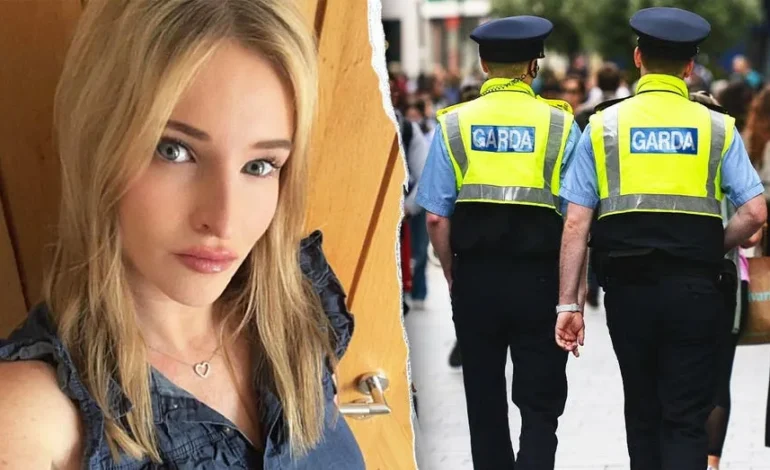

An international search is underway for a suspect in the brutal murder of an American woman in Ireland, but the lack of public identification by Irish authorities is drawing significant criticism. Jamey Carney, 43, a New York native who had relocated to the scenic town of Killarney in County Kerry, was discovered dead in her home late Monday. Authorities reported she suffered fatal head injuries and suffocation.
Killarney Murder and the Missing Suspect Description
Carney, who moved to Ireland in 2021, was found by her 13-year-old daughter in an upstairs bedroom. The discovery was made just before 1:30 p.m. on Tuesday. Tragically, the man Irish police have identified as a “person of interest” had already managed to travel approximately 200 miles from Killarney to Dublin Airport and board a flight to Turkey before Carney’s body was even found. This timeline suggests authorities were aware of his identity but opted not to release it publicly.
The picturesque town of Killarney, a popular destination for American tourists, is now the scene of a grim investigation. While Irish police have not publicly named or described the individual they are seeking, some Irish media outlets have reported that the person of interest is an asylum seeker from Jordan who arrived in Ireland in 2024, amidst a notable increase in asylum applications.
Criticism from Law Enforcement and Political Figures
The decision by Irish police to withhold the suspect’s identity has drawn sharp criticism. Former FBI Special Agent Nicole Parker questioned the strategy, stating, “How is the public supposed to help with locating the alleged suspect when Irish authorities won’t even release his name?” She emphasized the critical nature of time in such investigations, noting that delays increase the likelihood of a suspect evading capture, destroying evidence, or harming others. Parker pointed out that in the United States, law enforcement agencies would typically release identifying information immediately in similar circumstances to leverage public assistance.
Independent Dublin City Councilor Gavin Pepper echoed these concerns, labeling the lack of public identification a serious public safety issue. “That man had a substantial head start,” Pepper stated. “At the end of the day, it shouldn’t matter what color your skin is. If you commit a heinous crime, your face should be all over every newspaper, every TV station. A manhunt is a manhunt.” He suggested that a timely public release of the suspect’s identity could have facilitated his apprehension by authorities in the country he fled to.
Legal Basis and Immigration Law
When approached for comment, Irish police stated they were not in a position to release the person’s age, name, or nationality due to legal reasons, though they did not specify the exact legal basis. Reports from outlets like Gript.ie suggest that a 2015 immigration law, designed to protect asylum seekers from those they may be fleeing, could be a factor in the decision not to disclose the individual’s identity. This law generally prohibits the publication of asylum seekers’ details.
Despite repeated inquiries, Irish police have maintained that there are “no additional updates at this time.”
Divergent Views on Immigration and Crime
The case has also highlighted broader debates surrounding immigration in Ireland. While some, like Councilor Pepper, have linked the incident to concerns about immigration policies, others have cautioned against conflating crime with nationality. Ruth Coppinger, a member of the Irish parliament, criticized media reports that emphasized the suspect’s reported asylum seeker status, suggesting such coverage could “stoke the flames of racism.” Coppinger argued that the “common denominator in violence against women is a man, not a nationality,” a sentiment underscoring the complexity of the issue.
It is worth noting that several news outlets, including the New York Post and Irish Independent, have named the 28-year-old person of interest. However, Irish police and the Department of Justice have declined to confirm these identities.
The Victim and Her Life in Ireland
Jamey Carney, originally from Westchester County, New York, had made Ireland her home in 2021. Her social media depicted a life embracing her new surroundings, often featuring photos with her daughter and a partner. Her online presence also indicated support for the Free Palestine movement and expressed opposition to U.S. Immigration and Customs Enforcement (ICE). Her LinkedIn profile detailed a career in healthcare outsourcing, following earlier roles in insurance and real estate in the New York area.
Carney’s sister, Devon Bennett, remembered her as a deeply caring individual devoted to advocating for others. Bennett shared that while the family had roots in New York, Carney and her daughter considered Killarney their true home.
The International Manhunt
Irish police moved swiftly to issue alerts to transportation hubs shortly after Carney’s body was discovered. However, the suspect had already departed the country. The investigation has since expanded, with Irish police collaborating with Interpol, Europol, and Turkish authorities. Detectives are concerned that the suspect may have already left Turkey, potentially traveling onward to Syria or his native Jordan, possibly with local assistance.
Investigators reportedly believe the suspect may have initially traveled to the United Kingdom before arriving in Ireland, adding layers of complexity to the search. The difficulty in locating the individual is compounded by the passage of time since his departure.
Broader Context of Violence Against Women
Carney’s tragic death occurs against a backdrop of rising concerns about violence against women in Ireland. Reports indicate that eight women have died in violent circumstances in the country this year, a figure that matches the total for the entirety of 2025. An analysis of these cases suggests that in most instances where a suspect has been identified or sought, they were not Irish nationals. Ireland does not maintain official statistics on the ethnicity of individuals involved in criminal activity.